This was a comment made by Prof Stephen Farthing on 20th April after seeing my work and having explained my ‘touching a naked female sculpture’ dilemma.
I described the views of my course tutor and fellow students (at Mid Point Review on 15 Mar) and my presentations to our visiting artists (Kaora Homma on 18 Feb, and Rosie Sherwood on 1 Mar). These were largely skeptical except for a minority of my fellow students and Rosie Sherwood, and of course Stephen who at our previous meeting suggested that a nude sculpture would work better than a painting for my touch narrative exhibit.
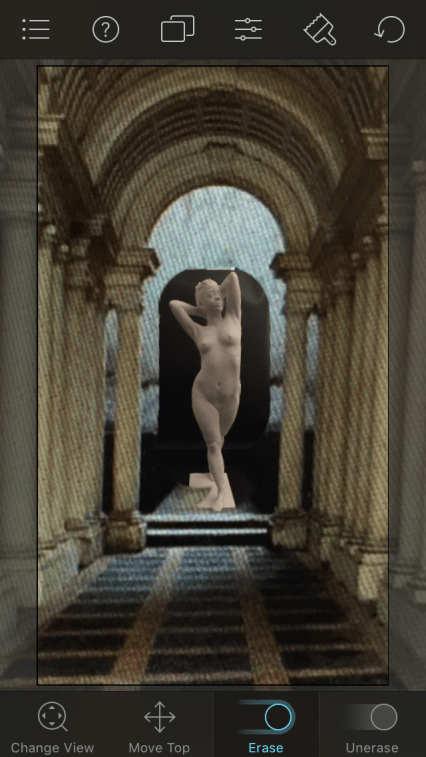
He did however suggest some compromises to accommodate the view of my tutor (“Terry, you just cannot do this!”). Stephen’s idea was to invite the viewer to touch the head of the sculpture or possibly its shadow. I remarked that he probably didn’t realise just how difficult this was to achieve. But I said that I would have a go. He also suggested, using a theatrical analogy, that whilst I had a character and a script I did not have a performance. He gave examples of a stage set putting my sculpture at the end of Borromini’s collonade, a false perspective to make the sculpture look life size (see below), and lighting or both.
So this is what I did:
Firstly, I could not isolate touching the head of my fully assembled life sculpture without painting all of it, which I did not want to do. We had agreed that the texture of the 3D printed material was very attractive and that it would be a shame to paint it.
A second 3D print of the bust (£200 later at Digital Fabrication, CSM) was used to paint conductive material on the inside underneath the model’s hair. But sadly the touch narrative did not work through the 3 to 5mm thick plaster. So I had to resort to learning how to change the Arduino programming of the Bare Conductive Touch Board. Shock horror! This was something I had tried to avoid at all costs and the reason I chose the pre-programmed Touch Board in the first place rather than an Arduino proper.
I had a few lessons from Grzesiek Sedek, Digital Media, UAL Wimbledon. And hey presto, I did it. And he did not do it for me! So I have learned another really useful skill. I downloaded a Sketch for the Touch Board that changed its function from a touch to a proximity sensor, and changed a parameter. to make the narrative turn off instead of keep going regardless. At the maximum setting, you can now hover your hand just above the head of the bust to trigger a narrative. And do it again to stop it. But only one narrative! So I had to download another Sketch to play random narratives and figure out how to make this a proximity sensor too. This is real coding as it it is not a standard Sketch. I had to cobble together two sketches. It took some time to get a working program. But I did this too, on my own at home, and much to my own amazement downloaded it to my Touch Board and it worked.
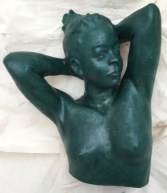
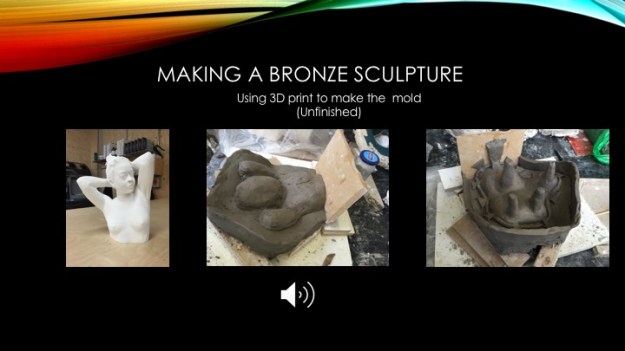
I can now also apply this approach to the base of the fully assembled sculpture. And to my other ongoing project – a bronze casting of the bust. This takes ages and ages and ages. I did not realise just how many steps and how long this would take.
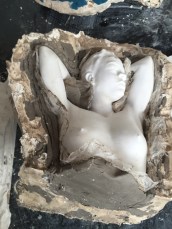
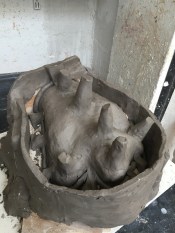
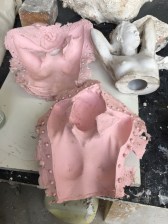
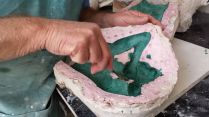
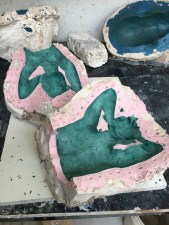
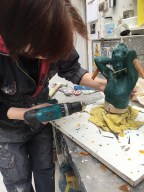
Two months later and I am ready to embed my sculpture in Grog! (a mix of plaster and already fired ground ceramic) ready for firing and melting the wax in order to be able to fill the mold with molten Bronze. Then I have to hack off the pipes, and repair the bronze. I will let you know how that goes.
The bronze sculpture is entirely conductive so to trigger random narratives you can touch ANYWHERE.
A few more technical steps needed to be worked out and resolved. Firstly how to power the Touch Board without connecting it to my laptop or to mains electricity. Secondly how to transmit (blue-tooth) the sound (narratives) to an external sound system. I won’t go into this but job done.
Now on to the performance.
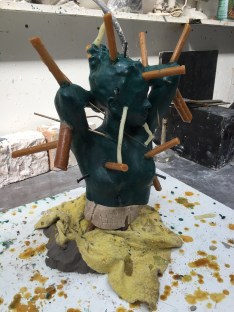
I got in touch with Alex May who gave me a few pointers how I might use Projection Mapping to create Borromini’s collonade false perspective without having to construct the arches. i.e to project them on to perspex sheets for example. Sounds hard. But I did put the first picture above together to see the effect.
I also investigated lighting within a plinth (or three).
That’s it so far. I think this will be my final year project. I have lots more to reflect on.
But I have made a decision. For the end of this academic year MA show where the first year students have a small space I will only show my triptych+ canvass – which I have yet to mount on the stretchers I have already acquired. This will be 2-3m long and 1m tall. I will not attempt to activate Vanessa’s narratives.
But I have agreed to work with Sharon on a joint exhibit. This will be or include a slip cast of the bust of Vanessa in ceramic, painted entirely in black in conductive paint, glazed and sound enabled with Sharon’s narrative. That is if the conductive paint and glaze combination survives firing. Hopefully it will.
These points revolve around the idea of touching the sculpture or picture of a nude life model to trigger her narrative in the artwork:
1. Which of the various alternative presentations work best in your view?
2. Should prevalent social attitudes determine whether the naked body should be touched by the viewer? Does touching the base of a sculpture only or a picture of the face of the model resolve any issues that this raises?
3. What narrative focus and length works best in your view – her early life, being a dancer, as a life model or a mix? Longer clips create more depth of understanding but will these hold the viewer’s attention?
Finally:
4. I am seeking advice about widening my research topic ‘How digital innovation can provide new opportunities for the artistic presentation of the life model’ to the human character or in some way to allow me to deal with the clothed figure, dance performance, or the kind of mixed object touch narrative exhibition (possibly targeted at a blind audience) you suggested last time.
Our first meeting last December
We met at the end of my first term (of 6). After showing you a brief portfolio of mainly life drawings I described my idea of ‘Giving the Model a Voice’. Vanessa, my life model had started to record her story as part of my intention to produce a touch narrative life sized painting of her similar to this. When you touch part of the painting you would hear her voice.
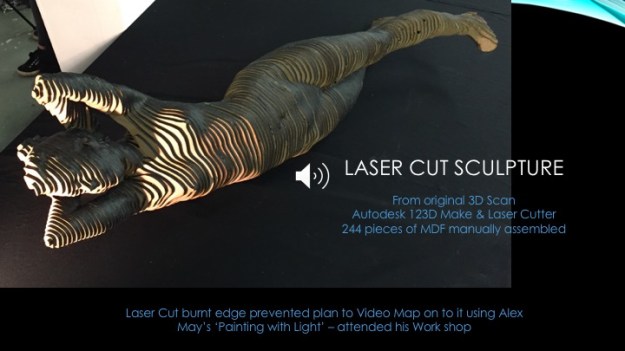
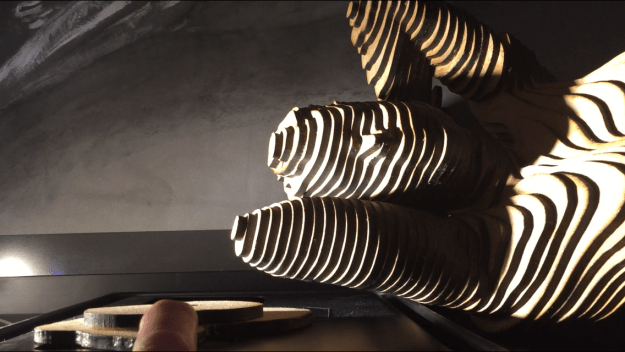
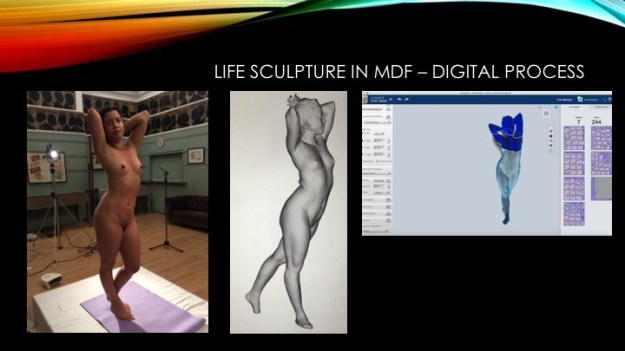
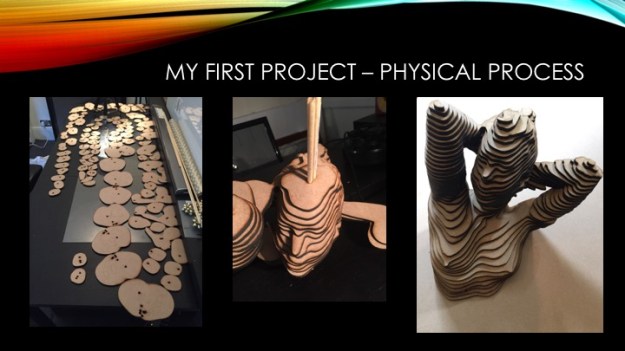
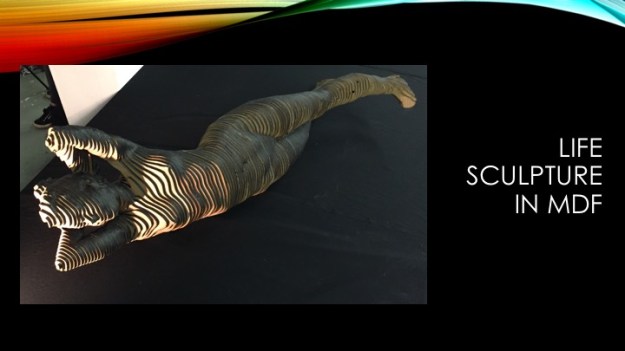
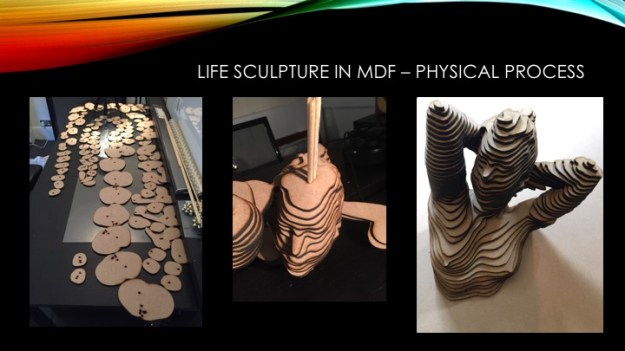
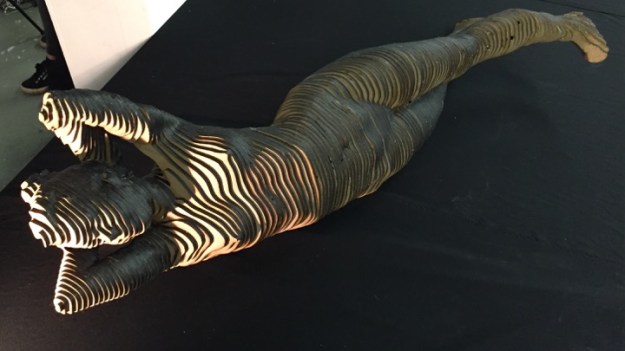
I had also made several 3D scans of Vanessa using an attachment to a mini iPad and just finished using one of them to make a 1m long sculpture comprising 244 pieces of laser cut MDF.
You said that you thought my ideas were “very strong” particularly because my non art related background meant that my concepts were original and not coming from research of other artists’ work in order to find my own voice and style.
You were very enthusiastic about the idea of giving the object of an artwork a voice and were surprised that others had not already done this. You suggested that a sculpture would be better than a painting as viewers would find this more natural to touch, but probably not a sliced sculpture as you thought that this was now less original.
You made several suggestions to enhance my idea, and could envisage a very successful professional exhibition with many different pieces (not just life sculpture). Perhaps one was sad and another happy? What would a Kalashnikov say? Or a pineapple?
We agreed to meet again at the end of my second term when hopefully I would have progressed further with this central idea.
Progress since we last met
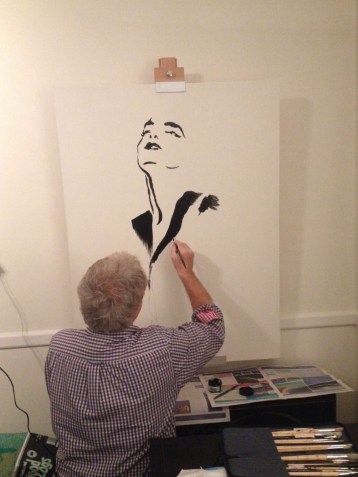
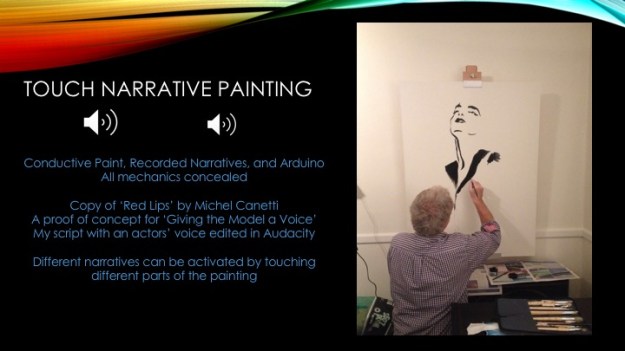
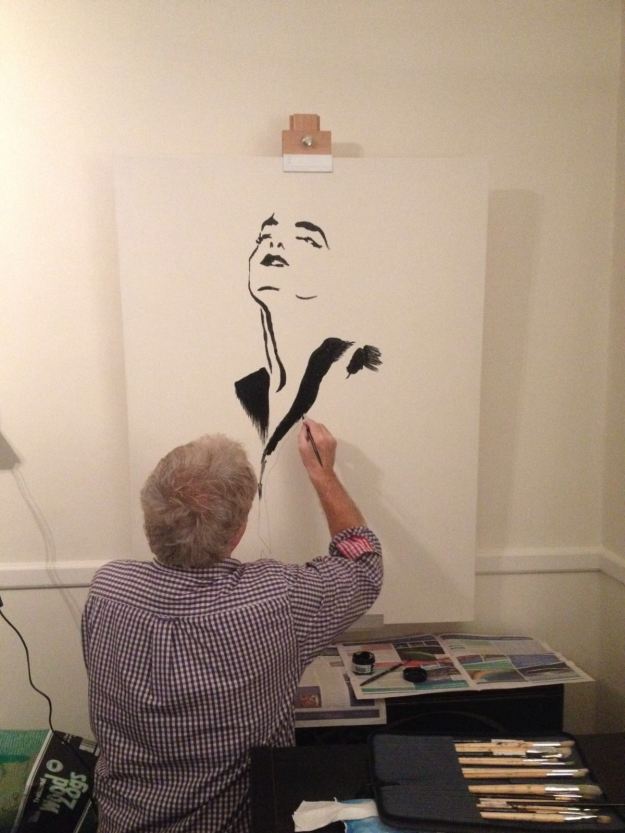
I decided that I would first need to continue making a touch narrative painting as I thought it an easier proof of concept than a sculpture. This was achieved by making a copy of a Michel Canetti painting ‘Red Lips’ – as it’s style lent itself to isolating areas to touch to initiate different narratives. At this stage I was less concerned with the content and more with finding out whether I could make the concept work. My original artwork would come later.
I thought it important that the mechanics be invisible to the viewer in order not to distract them from the art itself – so decided that these would need to be out of sight on the rear of the canvas. The whole process involved learning how to edit sound into clips (Audacity) that I could embed in a microprocessor (Bare Conductive Arduino Touch Board), connecting this to parts of the painting through the canvas (using Conductive materials), and making the microprocessor play the clips when the painting was touched (Sketch Programming), and then wirelessly transmitting the narratives to a sound system (Bluetooth). All this was unfamiliar to me. I also needed to discover which mechanics to use and how to make the elements work together reliably.
I titled the artwork ‘Unrequited Love’. When the viewer touched different parts of the painting it spoke to them directly with a different narrative. The viewer discovered that they were the one the painting was in love with.
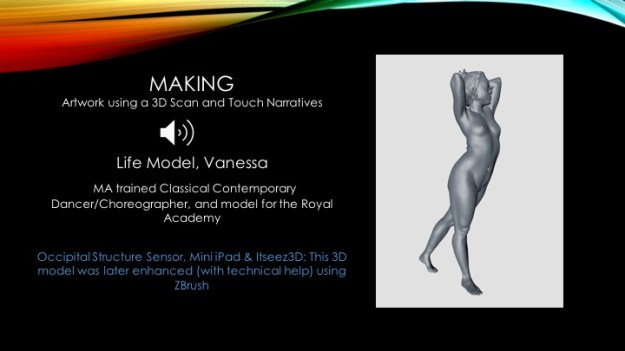
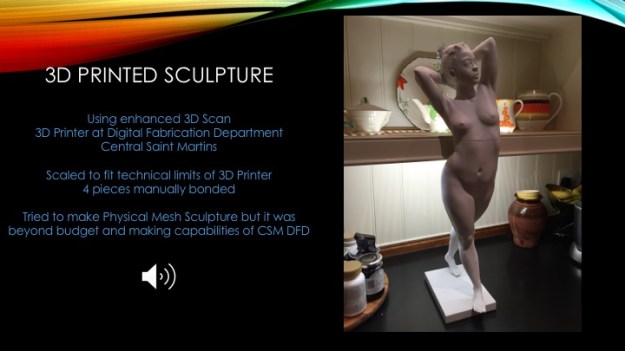
To make a touch narrative life sculpture I first needed to learn how to make a 3D print from the digital scan. I wanted to make a metre tall sculpture. The iPad Structure Sensor scan quality is high but not high enough for this purpose at scale, so I sought help to improve it. This involved external expertise in digital sculpting software (ZBrush) and then in other software used by the Digital Fabrication Department at CSM to check and resolve issues and to allow the 3D print to be manufactured within the physical limitations of their equipment. Cost and practical considerations meant settling for a 75cm tall sculpture in four pieces that I had to bond together after 3D printing.
I have yet to complete the editing of Vanessa’s 2 hour long narratives to make clips to be played when the artwork is touched, but have included some rough cuts here. Vanessa and I are jointly curating the final work. We have also yet to decide what parts of the body to touch. The current narratives do not relate to particular parts of the body, but if I want them to Vanessa has offered to record more that do. We have met to discuss all these aspects and she is happy for the viewer to touch anywhere on the artwork to play any of her recordings, but I will ask her to make the final decisions (after all, the piece is about giving the model a voice): In the end the practicalities of what can be achieved technically and what is acceptable socially for a life sculpture will limit the touching options.
I have experimented with a couple of ways to add the touch sensitive voice narrative feature. I would prefer not to paint the sculpture, but so far this is the only way I can demonstrate that it works. The areas to touch are first painted in black conductive paint with circuits going down to the base. The whole sculpture is then sealed and repainted in off white. The black conductive paint entering the base is then connected to the microprocessor in the same way as the proof of concept painting. All mechanics and devices are hidden in the base.
The preferred alternative (and one that may be more acceptable socially) is to leave the 3D printed sculpture unpainted externally but painted on the underside of the base only.
The idea is that the viewer touches the base externally and the conductive sensor is sensitive enough to respond through the base. This requires some reprogramming of the Arduino Touch Board to increase its sensitivity. I know this can be done and have organised some technical assistance to help me do it.
I also had the upper body printed a second time. Firstly, to make a metal casting at UAL Camberwell and secondly, I have used it to test out alternative touch narrative mechanisms for the full body sculpture such as those described above (I will bring it to show you it working).
The lost wax process for making a metal sculpture was also new to me and extremely time consuming. However, I now have the wax mould ready to make a wax model in order to make both an Aluminium casting (as it is a conductive material) and a Bronze (which sadly is not, but I want one anyway).
The Aluminium casting can be touched anywhere on the external surface to play a narrative (because it is all conductive). I do however need to reprogram the Arduino Touch Board to randomly select narratives when the surface is touched by the viewer. All mechanisms will be hidden in a base as before.
By the time we meet I will also know whether I can make another 3D printed life sculpture which I hope can be 90 cm tall made in 5 pieces. It will be transparent through the 3D printed mesh. The intention is to paint the inside of the sculpture with conductive paint with the circuits ending in the base as described earlier. This painting will need to be done before the sculpture is assembled. In that way a different narrative can be played depending on where the sculpture is touched by the viewer.
An issue to be discussed with Digital Fabrication technicians is whether shrinkage of the 3d printed pieces during and after manufacture is likely to be minimal (there was some on the solid sculpture which had to be resolved myself by hand). Otherwise the many ends of the 3D printed mesh in each piece will not align properly during assembly.
Click on the arraow to activate rotation
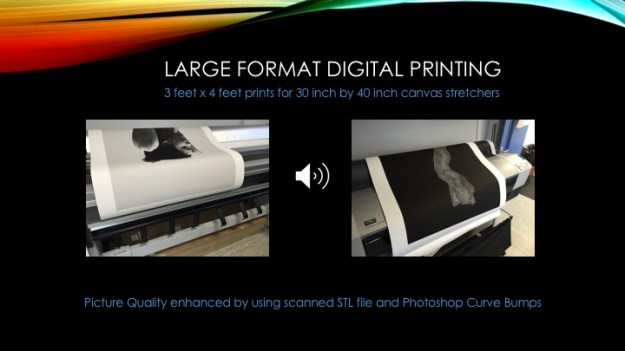
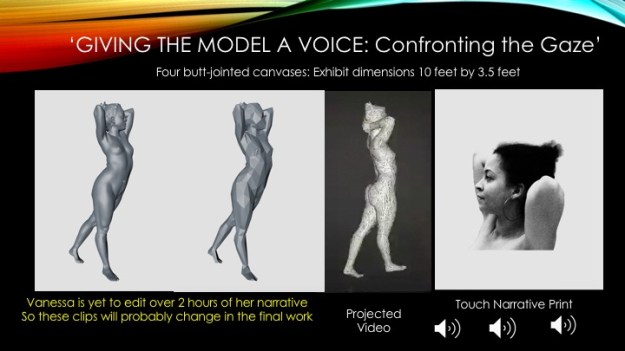
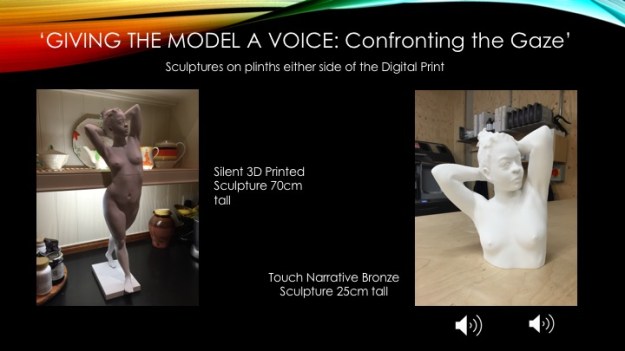
Finally I decided to experiment with some other software (Autodesk MeshMaker and Photoshop) to morph the 3D scan of Vanessa into various contemporary forms. The idea is to produce a large scale (3m x 1m) touch narrative exhibition quality digitally printed canvas (in fact 4 butted together – something I had seen done at the Saatchi gallery, Chelsea). The canvas prints are now ready to be mounted on stretchers. I will bring one unmounted to show you. The piece is entitled ‘Giving the Model a Voice – Confronting the Gaze’. By touching the model’s face in the picture the viewer ‘gives the model a voice’, thereby humanising her. She does not therefore remain a ‘passive’ female for the ‘active’ male to gaze at with sexualised connotations as the Theory of the Gaze suggests. Thus the Gaze can be confronted by the viewer if they choose to do so.
Giving the Model a Voice – Confronting the Gaze
3 Digital Prints plus Touch Narrative Digital Print
I have reflected upon the comments made on Skype as well as in my own recording of the Crit session in our Camberwell studio. I have also reviewed this blog in a meeting with my life model, Vanessa as I wanted to include her views before publishing it. It is interesting that she could not see why there was such controversy about the possibility of touching her nude image. It did not present a problem to her. She questioned why I had stepped back and made the touching element only the base of a sculpture or the digitally printed image of her face and shoulders. I will also be reviewing this work with Prof Stephen Farthing in the near future and will post his views in a future blog.
It was not until Jonathan invited closing remarks from my fellow students during the crit that David commented ‘perhaps Terry was questioning the spectator in the work’ that I felt anyone really ‘got’ the main point of it. This is why I have given an explanation below. I was also grateful that Philip understood that the piece was experimental and that was the reason I was trying as many devices as possible so that I could get a view on what worked and what did not. Donald was right in saying that by going beyond presenting each element of my work separately and putting them together in a controversial piece, that the work itself would get very little airtime. The discussion would focus on the controversial. And it did. I expected that to some extent but not to almost the exclusion of everything else.
I had assumed that most were already familiar with the ‘Concept of the Gaze’ in fine art theory but given some of the questions I think that this idea needed to be re-iterated in my presentation (although it was in my longer version in my last blog). Then it would have been apparent why the life model was female, and that I as a male ‘Confronting the Gaze’ was meant to be even more powerful than if a female (making a feminist point) were doing so.
Perhaps I should have just called the piece ‘Confronting the Gaze’ as ‘Giving the Model a Voice’ and ‘Touch’ by the spectator were the means by which this could be achieved.
The model could thus engage with the work and present herself as a human being rather than as a sexualualised object. The spectator, through touch, could personally and directly express their wish to do so (or not) by humanising the model and not viewing her just as a sexual object. To answer Katerina’s question, touch deliberately raised sexuality as a question. From the outset, the piece was understood by the artist and the model to be controversial, with the aim that it would engage the audience in heated debate. And it did, as the Crit went on for 25 minutes rather than the planned 10 to 15.
In my slides I stated several times that I was NOT the curator of the work, my model Vanessa was. Yet this was questioned. Vanessa freely chose the pose, had complete control to choose whether to be touched and if so where it was permitted to do so, as well as to make and chose her own narratives. Perhaps I should have emphasised this in my own voice during the presentation.
Interestingly, towards the end of the crit Jonathan said that he found the content of Vanessa’s narrative very interesting and commented that this was not talked about at all. After the crit Jonathan even suggesting to me that the work could be Vanessa’s voice alone without any images or touching.
GIVING THE MODEL A VOICE – Confronting the Gaze
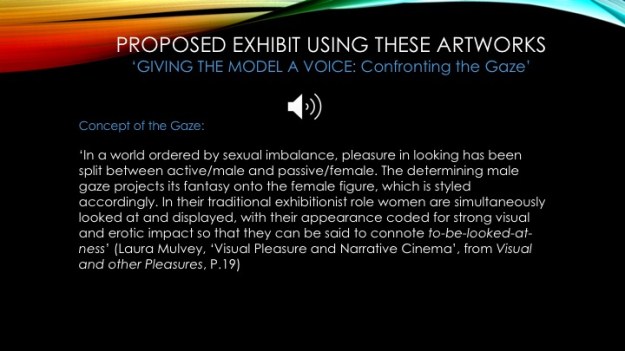
‘In a World ordered by sexual imbalance, pleasure in looking has been split between active/male and passive/female. The determining male gaze projects its fantasy onto the female figure, which is styled accordingly. In their traditional exhibitionist role women are simultaneously looked at and displayed, with their appearance coded for strong visual and erotic impact so that they can be said to connote to-be-looked-at-ness’ (Laura Mulvey, ‘Visual Pleasure and Narrative Cinema’, from Visual and Other Pleasures, P19)
The ‘Concept of the Gaze’ in academic fine art theory is primarily concerned with a man’s gaze at a woman. That is the reason, as the title suggests, that for this artwork I chose a woman as a life model and not a man (or even myself as some suggested).
This work is therefore and necessarily a joint collaboration between myself and my model Vanessa Abreu, an MA trained contemporary dancer, choreographer and life model for the Royal Drawing School. It is obvious from her pose that she is a dancer. This is important as I hope to bring this aspect into later works where dance performance and digital technology interact.
My practice began as life drawing and my primary objective here is not to treat the life model solely as an object in the work but to bring their humanity into it: In this case to express Vanessa’s feelings through her own reflective narrative so as to engage the viewer in a way that respects her as a human being and not just a beautiful female nude to gaze at.
Vanessa chose her own pose, and in the final work curated the choice of images and her narratives. She also chose whether to give the viewer permission to touch and determined any limits she wanted to impose. This has to be if I, the artist, am truly going to give the model her own voice and not my own, and to respect her personal space and feelings.
The gaze in this context seems somewhat impersonal to me and to confront it I needed the viewer to directly interact with the work. If they do not then they are playing out their role exactly as the concept of the gaze espouses.
However, if they do interact, the artwork expands to reveal the model’s personality, hopes, feelings and fears. She is not just a naked model to gaze at and walk impersonally by. The viewer can now see the model as Vanessa and is moved to concentrate on her as a person and to understand something of her inner self. The viewer’s thoughts will now not just focus on her image.
The decision to engage the viewer by touching Vanessa’s digitally printed image or sculpture was a difficult one. Something which caused a lot of discussion among my art mentors, colleagues and friends. There were some who were strongly opposed and others who felt exactly the opposite.
The act of touching a person could be said to cross current social boundaries and to even make a viewer react as if they were not treating the model with respect. But it is not her actual body that is touched (as is the case with some other controversially exhibited works) but an image (as Philip pointed out). And if that engages viewers in heated debate about the issues Vanessa and I have raised, then we the collaborating artists feel that is a price worth paying.
My aim here is not to objectify women which I hope engages today’s modern man (and woman) in a positive way, and to respect women as they would want to be respected themselves. I have Vanessa to thank for her vital involvement in this work.
For the present I have decided not to retreat to a non controversial presentation of my work. It will be interesting to see how it develops and the future reactions I get from my fellow students, tutors, and visiting artists.
Please allow a couple of minutes for the presentation to download
If you do not have Powerpoint you can also view the presentation below, but will need to initiate the audio and video clips manually. I have not yet selected and edited over two hours of Vanessa’s narrative with her so the actual narratives will probably be very different in the final work. Recordings of my own voice are also slightly different and slightly longer than allowed as I edited the Powerpoint to come in just under the allotted 5 minutes. This version also provides an explanation for the final piece of work shown in the last two slides.
No Audio: I uploaded the 3D model via Cinema4D to Photoshop to make four large format digitally printed large canvasses. These included a background only print on which to project a video.
This Thursday I should have a hollow 22cm tall 3D printed sculpture of the bust of Vanessa. This is being printed by the Digital Fabrication Department at Chelsea (CCA). I will use this to test the same touch narratives as my ‘Talking Pictures’ painting. If this works, and I cannot see any reason it won’t, I will make a full body version.
I also aim to use this 3D printed model to make a mold for a bronze sculpture using the facilities at Camberwell (CCA).
Making a full body version has already presented several issues even before adding the touch narrative features. These are size, detail, weight and cost.
A sculpture made by a CNC machine is very much cheaper than one made by 3D printing, because of the difference in material cost. A CNC version can also be larger than a 3D printed one because of the capabilities of the different machines (the size of their ‘banding box’). However, the sculpture detail in a CNC version is less than that in 3D printing, unless a 5-Axis CNC is used, but UAL does not have one. With a 3-Axis CNC I would need to carve some of this detail myself (such as inside the ear). External manufacture comes at a much higher price as they charge for set up and machine time and this is substantially more than the cost of material (London Metropolitan University quoted £1,200 for a 50cm tall solid sculpture in dense foam). Only a 5-Axis CNC can make a hollowed out sculpture which is ideal for hiding the wiring needed to make the touch narrative. The material used for the CNC machine is also very much heavier than that for 3D printing, which is very light.
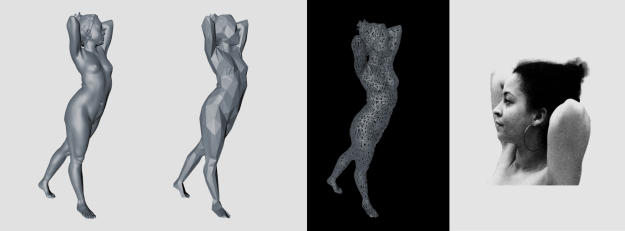
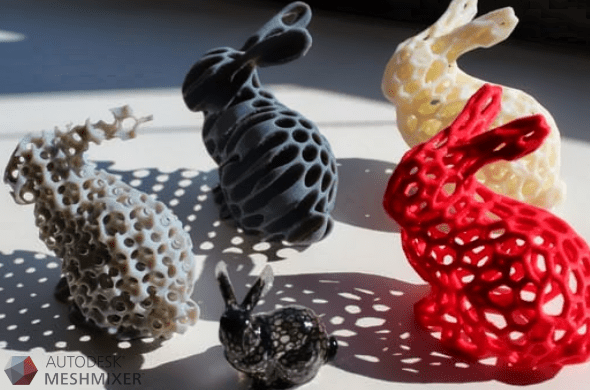
I therefore investigated making a 3D printed full body version with holes as this could potentially reduce the 3D material cost by up to 75%. I discovered that I can import my Vanessa 3D model into Autodesk Meshmaker to hollow the sculpture and insert holes. This diagram of rabbits from a Meshmaker tutorial shows an example of the kind of result that can be achieved.
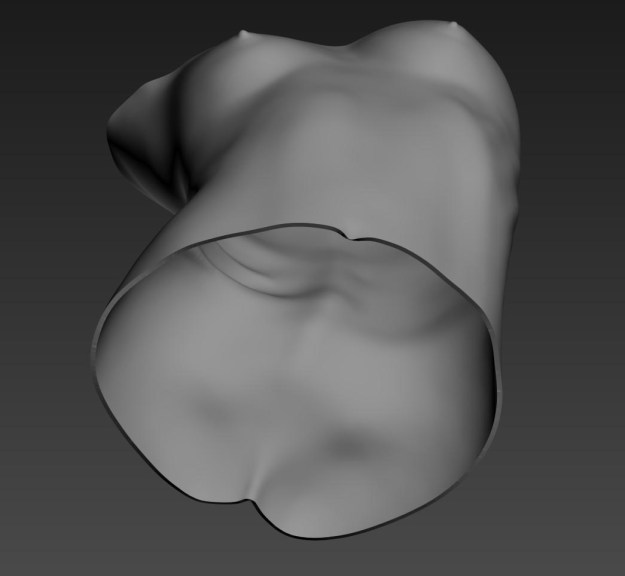
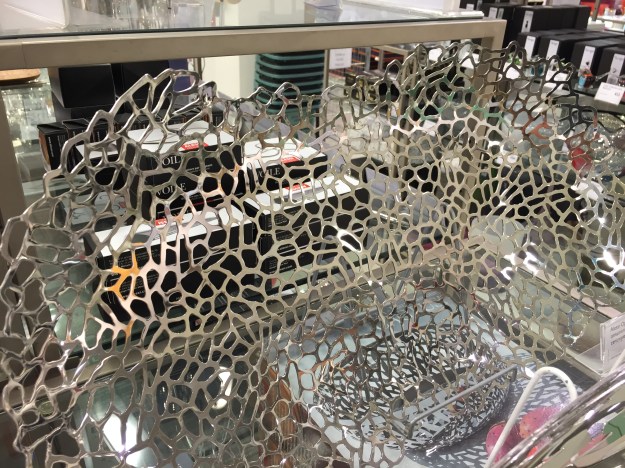
Using the two following images you can use your imagination to visualise the full body life sized hollow patterned sculpture of Vanessa that I will make.
This should reduce the cost to a more affordable amount and also make the sculpture more contemporary and aesthetically pleasing. I will then paint the ‘wiring’ for each touch narrative on the body of the sculpture using conductive paint. These lines will follow the pattern down the body with each circuit ending at Vanessa’s feet and entering the sculpture’s base. I will then paint over the circuitry so that it will appear to the viewer that the sculpture does not have any!! How the multiple touch narratives work would then be much more of a puzzle. I think that this mystery adds a lot to the artwork.
I aim to get a quote for this from the Digital Fabrication Department at my next appointment with Bill Dickinson when we meet this Thursday afternoon.
I still need to finish recording and start editing Vanessa’s narratives for this artwork. I am meeting her again quite soon so that we can continue this together.
I am reviewing progress with Prof Stephen Farthing when we next meet at his CCA studio on April 20th. I am particularly keen to discuss the nature of the narratives as these will be crucial to adding depth and truth to the finished artwork.
I think that Prof Farthing’s suggestion to add narratives to the sculpture instead of the painting is inspired and I am very excited by the prospect of making this a reality. I am beginning to think that this could be a piece for my MA final exhibition.
I have made a ‘talking picture’, a proof of concept for ‘Giving the Model a Voice’. This now resides in our MA Fine Art Digital studio at Camberwell. It is planned to be displayed at the ‘pop up’ show during our upcoming Low Residency later this month.
It is a canvas 4 feet by 3 feet called ‘Unrequited Love’. The viewer is invited into the woman’s private thoughts by touching parts of her image. Seven thoughts are there to be revealed (analogous to ‘the dance of the seven veils’).
The painting is of Michel Canetti’s ‘Red Lips’ of which I already have a framed print. I wanted to learn how to paint in this minimalist style using conductive paint. Areas of the canvas have to be isolated so that when you touch each one a selected narrative is played. My final work ‘Giving the Model a Voice’ will be of my life model Vanessa, in the same style but twice as large. Life Size.
My work ‘Unrequited Love’ will eventually end up in my daughters keeping as she loved it – but without the voices as they are recordings my wife (an actress) made, and my daughter thought that would be ‘weird’ in her bedroom!
You can listen to the recordings below. So go ahead. ‘Touch’ and listen to the emotions and thoughts of this heartbroken woman. She is talking to YOU.
I hope you like it and are not too upset by what you have heard from someone who obviously loves you.
POST SCRIPT
I have now also started work on a ‘Talking Sculpture’ as suggested by Prof Stephen Farthing when we last met. Again this will be of Vanessa in pose. Bill Dickinson who runs the Digital Fabrication Department at Central Saint Martins was most helpful. Their facilities are Amazing!
A sculpture is much more challenging technically. The ‘wiring’ for each narrative has to pass from the surface of the sculpture through its core to an Arduino microprocessor (in my case the Bare Conductive’ Touch Board’) hidden in its base, and from there to a speaker system hidden in the pedestal on which it stands.
IT WORKED! – I have now proved that I can play a narrative by touching a part of a sculpture or painting. I have also proved multiple narratives on the same artwork (not shown). Hoorah!
Please turn your sound to MAXIMUM.
My next proof of concept step is a moderate sized painting with some short narratives. Onward and Upward!
We reviewed my work and plans for this term and Jonathan made some useful observations and suggestions for what I should focus on next. I am really enjoying this course and said so.
My last One-to-One tutorial was on 7 Oct and I am pleasantly surprised by just how much I have done since then. I am pretty much on-track with my work plan as set out in my Study Proposal of 3 Nov 2015. Jonathan asked whether my work plan involving ‘5 MA’s’ had narrowed down or widened. You can judge. Since then I have:
Exhibited in the Fine Art Digital pop up show at the end of last term. A one metre tall sculpture from life of Vanessa, a classical dancer, made up of 244 pieces of laser cut MDF. Jonathan liked the art work and so did 87 other people who have complemented me on it. I have been bowled over by this response to my first ever sculpture. Perhaps this will be revisited as part of my exhibition for my MA next year – after a period of experimentation possibly to finally end up back where I began.
Had several one-to-one meetings with artists exploring their attitude towards work involving digital processes (the subject of my next blog). Jonathan was particularly impressed by the fact that this included Prof Stephen Farthing, who has also invited me to meet up with him again this term. Prof Farthing thought my ideas were “very strong” (relief!!!). Particularly because my non art related background meant that my concepts were original and not coming from research of other artists’ work in order to find my own voice and style. Again his words. He was very enthusiastic about the idea of giving the object of an artwork a voice. He was surprised that others had not already done this in the way we discussed. He suggested doing this with sculpture rather than a painting, and whilst impressed with my sliced sculpture in my first term thought that this was now passé. He made several original suggestions to enhance my idea, and could envisage a very successful professional exhibition with many different pieces (not just life sculpture). Perhaps they were all sad and one was happy. What would a Kalashnikov say? Or a pineapple? He suggested I promote such an exhibition on the equivalent to ‘Blue Peter’. He attributed that programme to the resounding success of the Leonardo exhibition as it encouraged children to get their parents to take them to see the drawing machines he used. He thought my work would also stimulate the interest of children as well as the blind. I am just relieved that he did not think my concept gimmicky. I was also very surprised to get an email from Bridgette Mongeon, a master sculpture with a practice in Houston, Texas who had picked up from my bibliography that I had included her recently published book ‘3D Technology in Fine Art and Craft; Exploring 3D printing, Scanning, Sculpting and Milling’ and that I was interviewing artists. She said that I could interview her on Skype which I will do this term. I showed Jonathon and he asked the library to stock it. I can thoroughly recommend it for anyone wanting to use technology to produce physical artwork as many artists explain exactly how they did their work. Not something you usually discover as most artists are unwilling to do this.
Started work on my second project in the Vanessa series, an interactive life size painting ‘Giving the Model a Voice’. I have about three hours recording of Vanessa’s thoughts during and around our studio modelling sessions, which I have begun editing with the help of Tim, one of the Digital Media technicians, and have acquired all the materials necessary to produce the work. I am about to test a small canvas with conductive paint connected to the Bare Conductive Arduino microprocessor to play a couple of clips of Vanessa’s voice. A huge learning curve fore me as I have never used a microprocessor in my artwork or painted on the proposed scale, let alone with conductive paint. My objective is to produce another piece of work for any potential pop up show at the end of this second term.
Presented my work and some of my further proposals – physical pieces involving digital processes – for a Crit with visiting lecturer Jonny Briggs (see earlier blog). Future work included a life size sculpture in laser cut card of a male which I would then use as the canvas for video mapping using Alex May’s software ‘Painting with Light’. This effectively involved ‘MA number 6’ as I could not use my existing sculpture of Vanessa as planned because cut MDF had produced a surface that was far too dark for video mapping. This should ideally be light grey, and not dark brown. Hence the need for another sculpture that would lend itself to this treatment. I found a piece of software from Japan that could help me make this. I am hoping that Jonathan invites Alex May to give a Video Mapping workshop at our Low residency at the end of February, as this will help me produce this part of the installation. Jonathan said a date has now opened up if he is available and will try.
Investigated the possibility of producing a bronze version of my Vanessa sculpture using the same 3D scan (I am now losing count of the number of ‘MA’s’ I am considering undertaking!!). I discussed this with a 3D digital designer friend who has a 3-axis CNC machine in his garage. I have also discussed this project with Becky in the Camberwell 3D studio, specifically the possibility of making a mold using the ‘Lost Wax’ method, which I can do if I provide a version of the sculpture in dense foam. I discovered that my scan is not detailed or complete enough (200,000 polygons), and that I need a 5-axis CNC to get into the crevices of my sculpture (under the arms for example). Jonathan thought that there is not one in UAL and he has subsequently proved to be right. My friend spent some time cleaning up and sharpening my scan using photos I sent him. He did a great job and I now have a version with 2 million polygons which is complete and much sharper. I also spent ages looking for the right equipment in UAL, Makerspaces, commercial businesses, and other Universities. I have had a quote from one of the London Universities for a 40-50 cm tall version in the densest foam for over a grand!!! I think I can only afford something much smaller. I was hoping to get to grips with making the bronze piece during our low residency (or after). But I ask myself by the time I add the cost of the bronze material – is it worth it?
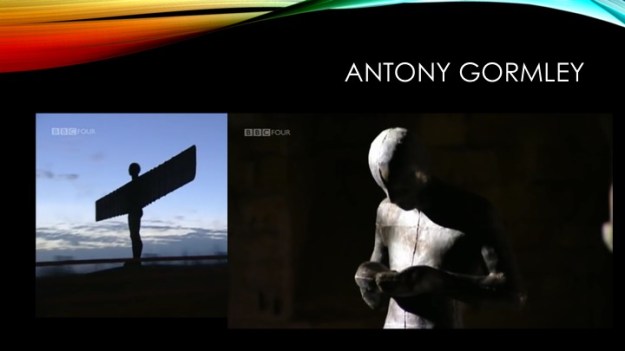
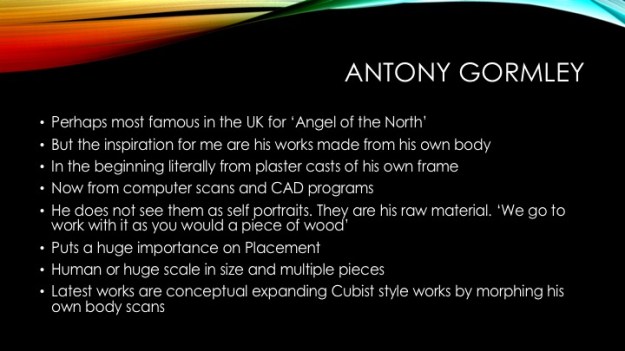
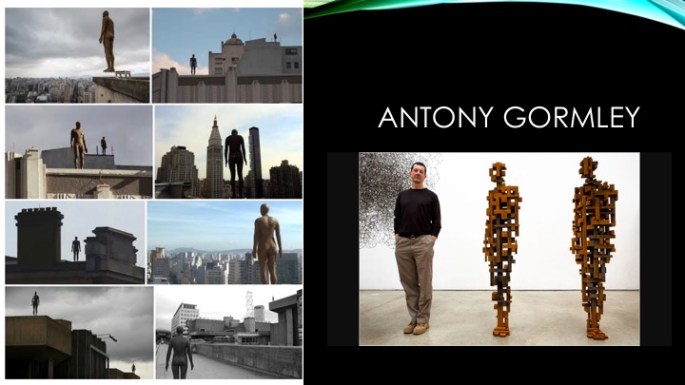
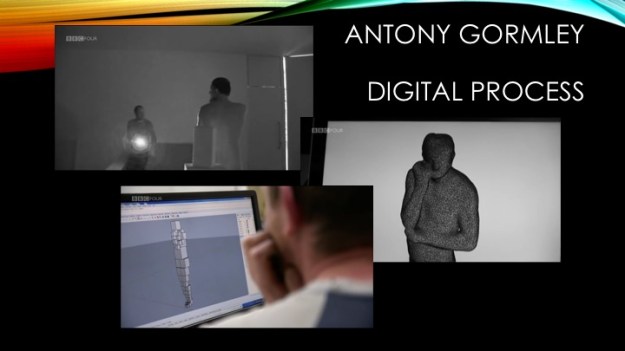
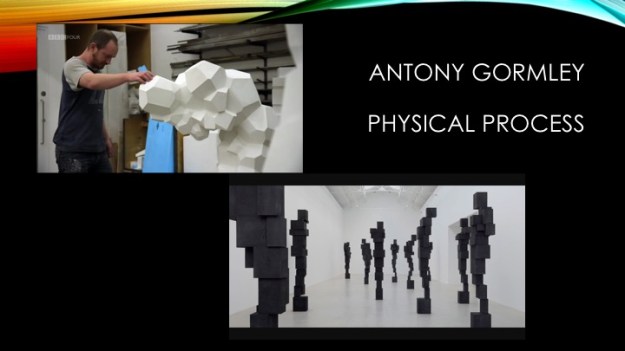
Attended at Camberwell (despite being an On-Line student) almost every week for one or two days during term time usually including the Wednesday tutorial and actively participated in most concluding Q&A sessions. During the last On-Line tutorial I presented on Antony Gormley as an artist who informed my work (see earlier blog). Jonathan thought that this artist was a good choice for me as the connection could clearly be seen in the broadly similar scanning, and CAD to sculpture processes that I have adopted to date.
Attended several art exhibitions. My favourites included the Lumen Prize runners up exhibition at Canary Wharf, Digital Design at the V&A, and William Kentridge at the Marian Goodman Gallery. One of the artists I met, Richard Colson, is on the Lumen Prize panel and has seen my Vanessa sculpture. He suggested that I submit it for the next Lumen Prize. That was unexpected! I introduced the other Camberwell MA students at the V&A Digital Design exhibition to Alex May who talked us through his amazing Oculus Rift installation ‘Sequence’. Kate MccGuire, MA RCA (who is now exhibiting internationally including recently at the Venice Biennale) spent a morning taking me around a few exhibitions including introducing me to William Kentridge’s work ‘More Sweetly Play the Dance’ at the Marian Goodman Gallery. A privilege, as she told me that she normally does not do interviews. I was really taken by that and would absolutely love to try to make a similar installation – but as Jonathan has said I need to focus. Clearly I need to shortlist my projects not keep adding to them.
Completed 25 substantial blogs, about two a week, and in all approaching 20,000 words. You can read the others on my WordPress blog if you want. I have not tagged them yet as I need to remove the pictures of my life models in pose. I do not think that is something they would like published on the Internet for all to see. I slipped up not realising that my audience was wider than my MA colleagues. Something else to do this term.
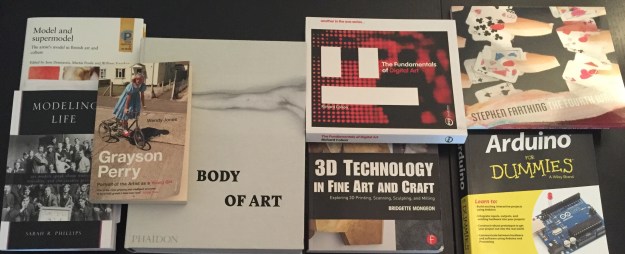
My reading list has expanded and I am slightly behind the pace I need to cover 50 books as per my proposed bibliography. I now think that I can reduce this to about 30-40 without compromising the ground I need to cover, and by sharpening the focus of the material I need to read to meet my research objectives. Here are some of the ones I have got stuck into to date. Mostly understanding the life model, the history of the human body in art from cave drawings to the present day, and the practical aspects of producing the work that I am interested in making.
CONCLUSIONS
As I have been writing this blog I have been reflecting very deeply on my discussion with Jonathan, and have reached some important conclusions. I will not change what I have said in this blog about projects I am working on, but perhaps now is the time to cull some of them.
During our one-to-one I also raised a concern I had about my work arising from some of the points Jonathan made in our on-line tutorials. I want to produce artworks with meaning and depth to them and not get seduced by the technology – which after all is a means to an end and not an end in itself. If I had not raised this then Jonathan said that he would have. He said that he was very encouraged by the fact that I had. It gave him confidence that I can balance being very strong on experimenting with process and raising the depth behind my work to the same level. We were both amused about the idea of raising the depth.
My MA Project
I must attempt less projects or reduce the scope and complexity of some. I have not even mentioned in this blog the projects I am considering that will remain in the digital space rather than producing a physical artwork (see my Study Proposal blog). I have already spent a considerable amount of effort researching and acquiring resources for them (a holographic display, and various CAD programs). It is obvious to me that it is an impossibility to attempt them all in the timescale of my MA. I have agreed with Jonathan that I should spend this year researching, experimenting and making, and next year focusing on perfecting a chosen project.
I have been very influenced by Stephen Farthing’s comments, so I am now thinking of using the MDF sculpture and interactive painting of Vanessa as a stepping stone to producing an interactive sculpture rather than one painted with light. Because of the cost of producing a mold from the scans I have already made and of the expensive materials such as bronze, and of the positive reaction I have had to my MDF life sculpture I believe that I should stick to that format. Perhaps I will make a hollow sculpture of Vanessa (to encase the wiring needed to connect the Arduino and play the narratives that Vanessa has made), acquire a ready made scan of a Kalashnikov and make a scan of a Pineapple! That will be my first alternative for my MA project of physical objects made using digital processes.
For my other alternative MA project I definitely want to make an artwork that remains in the digital space. So in May when I receive my Digital Art Projector, I will experiment with animating a version of the refined scan of Vanessa, and make her dance (as she is a classical dancer), so that she can be viewed in 3D holographically and projected large on a wall in 2D at the same time.
I will then have to choose between the two, and focus on perfecting my chosen project next year.
My Research
Jonathan made a very helpful suggestion to help me raise the level of reflection and depth underpinning my work. This was to study the work of another artist – to understand the philosophy behind their work – as I had begun to do in my presentation on Antony Gormley. He suggested that I also look at the work of Anish Kapoor. Look at his own words on the philosophy that drives his work, at professional reviews of his exhibitions, and blogs of other people who have seen them. To get a rounded viewpoint.
This has to be as strong an emphasis this term as my focus on making. It will be good preparation for two upcoming assignments this term:
A 5 minute presentation of my work and then a 5 minutes crit while I must remain silent.
A written piece where you talk about two artists who inform your work – when you are not allowed to talk about your own work.
Both will be interested in the philosophy behind my own work.
I have a lot to think about and a lot to do. I love it!
Here is a presentation I prepared for our on-line tutorial with Jonathan on 19 January 2016.
My study proposal: How technological innovation can provide new opportunities for the artistic presentation of the life model.
A comparison with the digital process used for my first sculpture
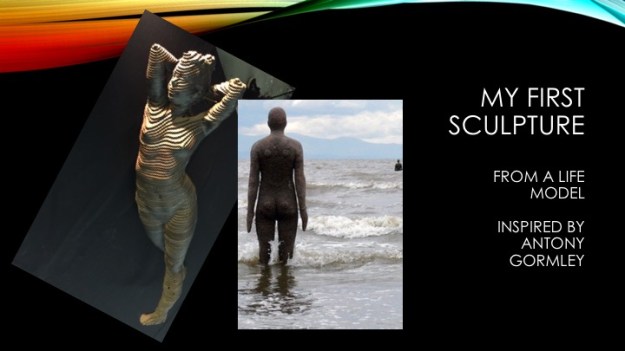
Antony Gormley now has a huge studio and staff to help design and make his work in many materials. I have me and the facilities of Camberwell College of Art. My sculpture is one metre tall but my short term ambition is life size.
Actually I discovered most of what I know about Anthony Gormley’s work AFTER I made this sculpture: But he has inspired my thinking for future works and will make me consider the context and presentation of them in much greater depth.
Following his Wilson Road Wednesday afternoon presentation of his work, artist Jonny Briggs held a Crit session for five of us at Peckham Road. This was of particular interest to me as an On-Line student. It was open to all those studying MA Visual Arts and included a presentation from a student of Book Arts as well from my studio based Fine Art Digital colleagues. I was one of five who presented their work. Here is my presentation.
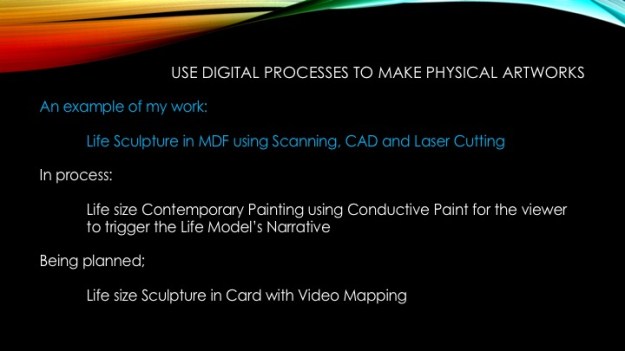
This work has been explained more fully in my previous blogs.
More details about this work can be found in my earlier blogs. But then it was in the planning stage. Now I have started making it.
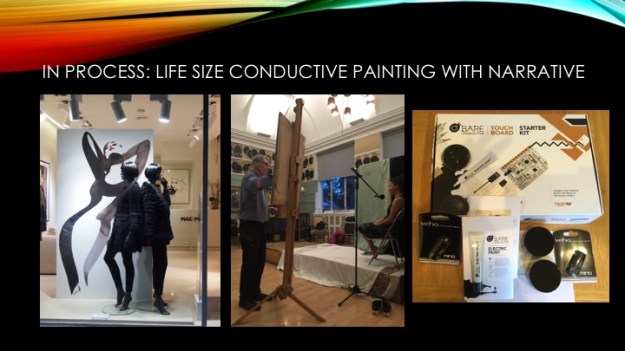
I have 3 hours of recordings made by my life model Vanessa, and have acquired all the materials as shown to trial a small canvas, and then make the life sized piece. My next step is the trial work. This will be crudely painted using conductive paint connected to the Bare Conductive Arduino microprocessor and a couple of roughly edited clips from Vanessa’s recordings, and my home hi-fi system.
Stephen Farthing, our chair of drawing at UAL suggested that I try this out on a sculpture instead of a painting. I will have a go if I have the time, assuming the above (easier!) project is successful. You can hear more about my one-to-one with him in a later blog. I am due to see him again soon.
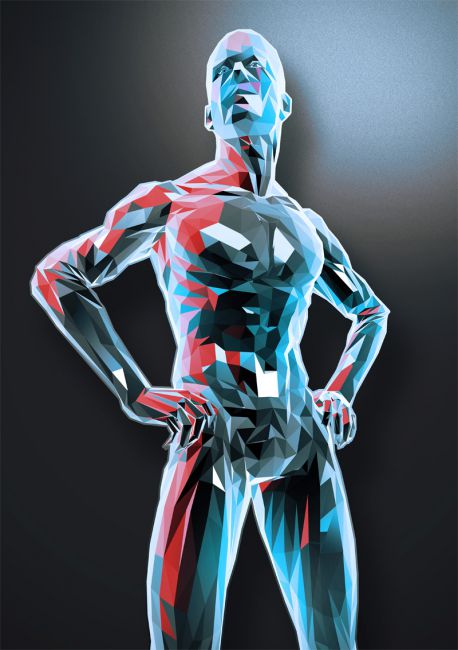
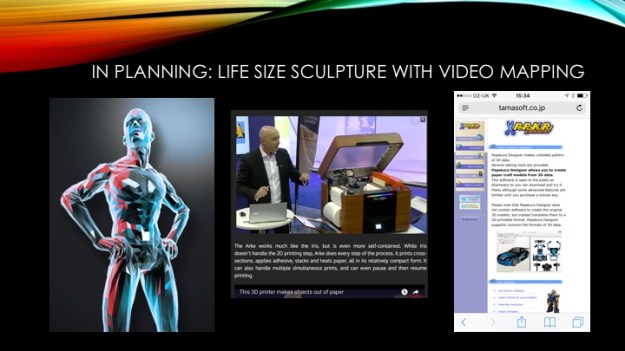
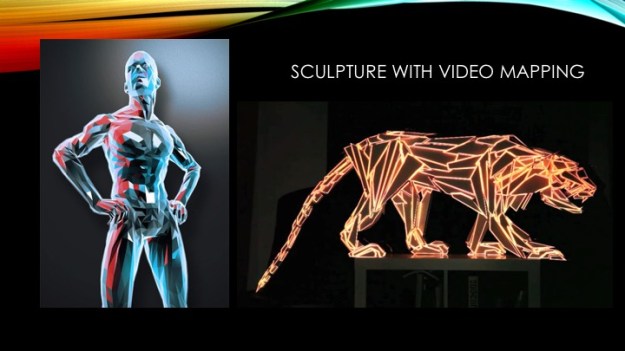
I have acquired a program called POSER from Smith Micro. I can take an existing 3D scanned image of a man and morph it to look something like the above. The man will have an angular profile and will be used to map a video on to it. The plan is to make it of light grey card (a colour recommended by Alex May to give the best image using his program ‘Painting With Light’ – see earlier blog). Hopefully the card sculpture can be made life size or at least 1 metre tall. I hope to use this video mapping software to make an installation with music similar to the one shown in my Study Proposal blog with the paper tiger .
I have investigated how to make my 3D model in card hopefully using a similar process to the laser cut sculpture described earlier.
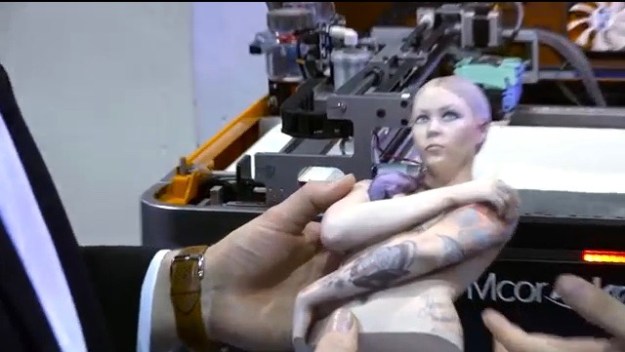
Firstly I found a very new 3D colour printer, ARKe from Mcor that has just been shown at CES 2016 and is currently just being released in the USA. This uses standard paper to print and cut the pieces to make the sculpture. It actually glues the pieces together to make the finished piece. I found out about this from the website accompanying the book 3D Technology in Fine Art and Craft: Exploring 3D Printing, Scanning, Sculpting and Milling by Bridgette Mongeon published recently in Sept 2015. See http://www.digitalsculpting.net and http://mcortechnologies.com/3d-printers/arke-3d-photorealistic-colour-printer/.
However whilst interesting it did not achieve what I needed to do, costs 9000 US Dollars, and is not accessible to me.
I am now exploring another alternative from tamasoft.co.jp from Japan. This is an open source application called Pepakura Designer which runs on Windows 10 and supports various 3D formats including OBJ which I used before to make my sculpture. It produces unfolded patterns from the 3D OBJ file to PDF. I will try this out and see whether I can input it to the Camberwell Laser Cutter, scale up the output and cut the pieces from sheet of card. These will then need to be creased and glued together.
This demonstrates that to produce my artwork I am creating a path rather than following one that has been trod before. We will see whether this works and I will let you know the outcome in a later blog.
Anyway this is what I aim to produce – a 3D humanoid sculpture in card which is then painted with light. The video is based on the paper tiger and I aim to produce something similar using my human card sculpture.
Here is a 15 minute audio of Jonny Brigg’s comments. You will need to turn sound to Maximum.









 terencemquinn91