Author Archives: terencemquinn91

Unknown's avatar

About terencemquinn91

Artist involved with Mixed Reality integrated with physical art installations. MA Fine Art Digital (Distinction), and Visiting Practitioner at UAL.

Review of my Original Study Proposal

I am now at the end of week 37 of my MA, and predictably my ideas have developed and changed since I wrote my original proposal in Week 8:

https://terencemquinn91.org/2016/10/19/ma-fine-art-digital-unit-1-project-proposal-original/.

This narrative is intended to give a fuller explanation to changes I have made to my  recently updated Study Proposal:

https://terencemquinn91.org/2016/10/19/ma-fine-art-digital-unit-2-updated-project-proposal/.

Working Title:

Drawing from my pre-MA focus on life drawing, primarily with the female form, my working title was How technological Innovation can provide new opportunities for the artistic presentation of the life model’.

Progress report for my Project Proposal of Week 8

The current status of each aim and objective is described below.


Aims and Objectives:

1. To research how artists’ use technology in their practice.

I have made substantial progress towards these ongoing aims and objectives.

a. The history of how artists have adopted new technology.

b. How contemporary artists have taken advantage of digital today, in particular in the presentation of the human figure.

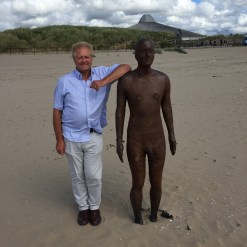
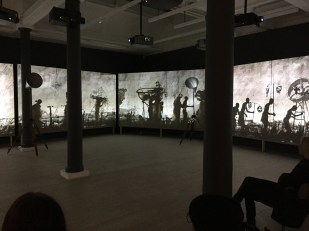
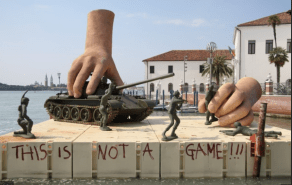
Through reading, visiting art exhibitions and conversations with a wide range of stakeholders in the art world, I now have a significantly greater knowledge of the use of technology in art practice, but of course this objective is still ongoing. I am particularly drawn to the work of William Kentridge, Anthony Gormley, and Lorenzo Quinn.
 

img_4105-3

Gormley and I at Crosby beach, Liverpool              
img_9817-2

William Kentridge at my visit to the Marion Goodman gallery, London
screen-shot-2016-10-01-at-12-53-17

Lorenzo Quinn at the Venice biennale

img_2400

Lorenzo Quinn at my visit to the Halcyon gallery, London


2. To research recent technology developments and how these might be employed in my own practice.

I have accomplished my aims and objectives with respect to making art works that are born-digital, when their final manifestation is physical. 

a. The use of digital devices to further the model’s character in the artwork.

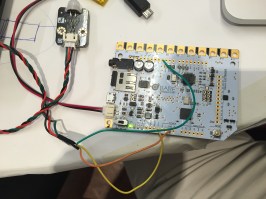
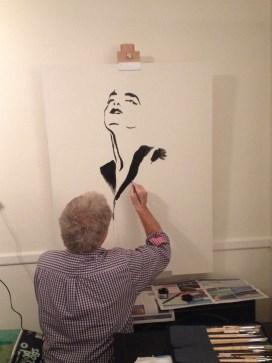
My first Year MA display included adding ‘voice’ through the use of proximity sensing and conductive materials employing the Bare Conductive Touch Board (an adapted Arduino). This gave the model a voice in two works, one a painting Unrequited love, and the other a sculptural work Metamorphosis. The latter was entered for the International 2016 Lumen Prize Award, but sadly did not make the long list.
 

FullSizeRender 23

Unrequited Love

FullSizeRender 29

 Metamorphosis    

img_3213

 Bare Conductive Arduino

I was lucky enough to have two tutorials about these works with Prof Stephen Farthing, UAL Chelsea. I received a lot of technical support from Digital Media, Wimbledon, CCW Digital (now the UAL Digital Maker Collective) at Chelsea, and from Ed Kelly at Camberwell. I was taught how to make a hollow bronze cast in the foundry at Camberwell. So I have been making considerable use of opportunities across the UAL colleges.

b. 3D Scanning and Printing

I acquired my own 3D scanner an Occipital Structure Sensor, which I used to create three pieces of work. Firstly, Vanessa, a metre-long work in 244 pieces of laser cut MDF, a contoured body, formed by taking a 3D scan and processing it in Autocad 123D Make, to produce the pieces which had to be assembled and glued together. This work was shown at the pop-up show at the end of our first term.

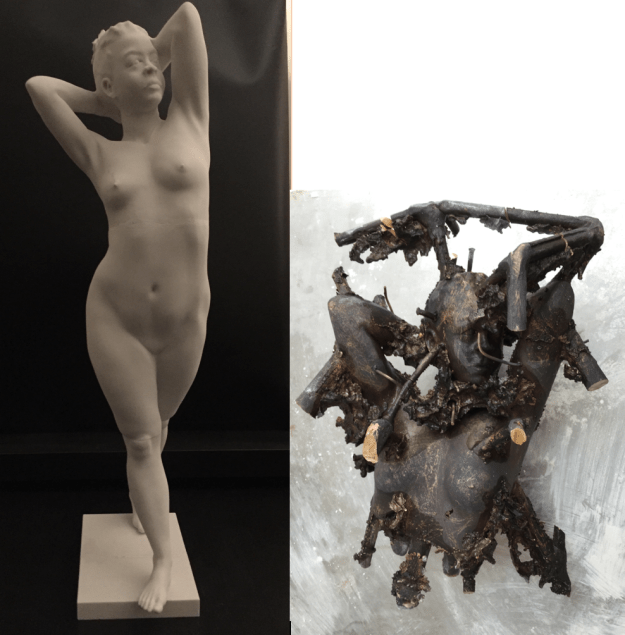
Secondly, the same scan was used as the basis for making the two sculptures in Metamorphosis. One was processed and printed in four parts (total 75cm tall) using 3D laser sintering in the Digital Fabrication Department of UAL Central Saint Martin’s (shown earlier). The other was the bronze bust made in the foundry at UAL Camberwell.

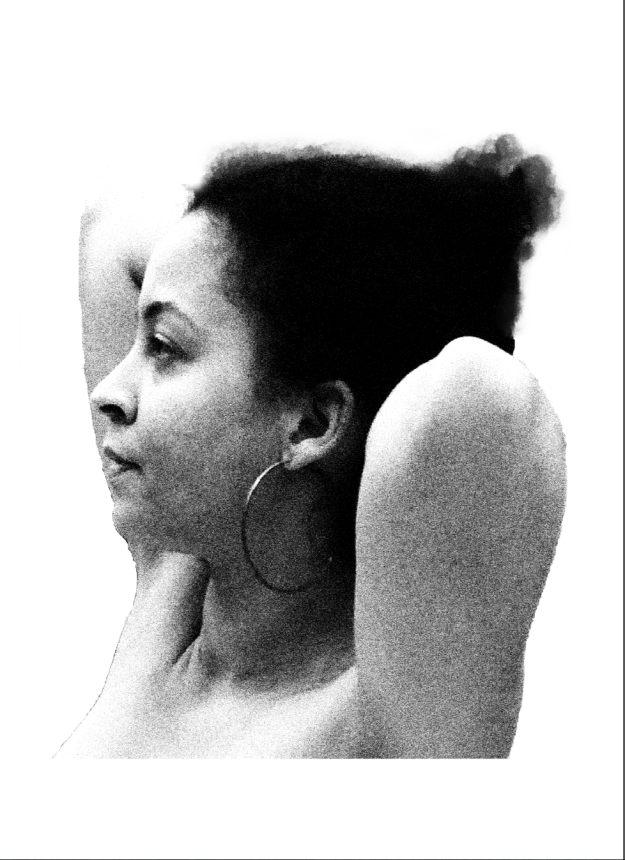
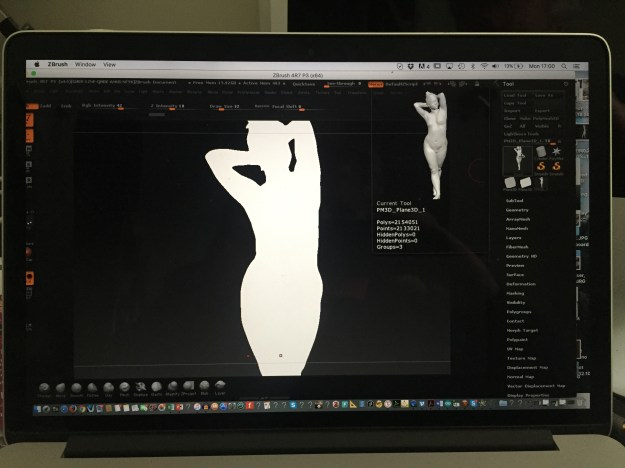
Thirdly, the 3D scan was morphed in various ways using Autocad 123D Make, ZBrush and Photoshop. Four different images were digitally printed on canvas using the Digital Media Department at UAL Camberwell. These four canvasses together make the 3m x 75cm artwork Perspectives of Vanessa. Possibly the first image above will be projected on to the canvas, so that it can be seen rotating in 3D. I have already made this video and digitally printed a blank canvas with the same background, ready to do this.


I have not yet made any art works that are born-digital where the final manifestation is entirely digital. I have, however, made considerable progress in preparing for doing so.


c. 3D drawing and display including holography.

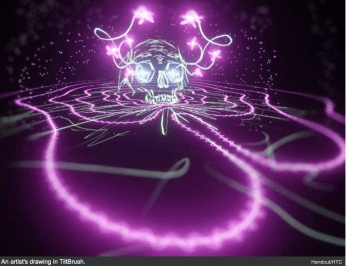
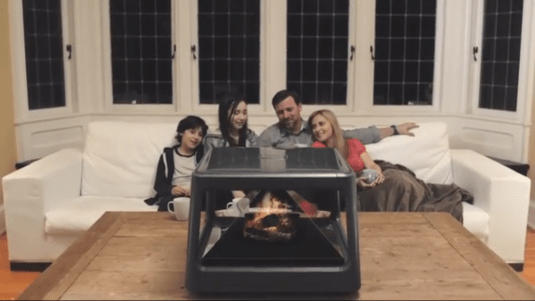
I have acquired a Wacom Intuos Pro Pen Tablet, which will enable me to draw in 2D. However, with the recent availability of Google Tilt-Brush for Vive Virtual Reality, I will draw in 3D instead. I am awaiting delivery of a 3D Holographic Display.
 

img_5058

3D holographic display unit ordered from Holus+ Technology in Canada

At the V&A Digital Design exhibition in September, I saw and discovered that you can upload a 3D file in Sketchfab and view it in a VR Google Cardboard headset or equivalent. You can also record a still or video background using a 2D 360 degree camera, such as that now available at the Digital Maker Collective at Chelsea.

I also discovered that you can record video in 3D 360 degrees with a recently announced YUZE camera, which will be released at the VR & AR World Show at Excel on 19/20 October. I have obtained an entry ticket and will consider buying this device. It is a similar price to the VIVE. However, I will defer doing so until I have seen the 3D Augmented Reality Video recording facility used by Double Me at Ravensbourne Virtual Reality research centre.

Both the uploaded file and the video background will be able to be viewed on the holographic 360 degree display.

d. 3D Painting in Virtual Reality.

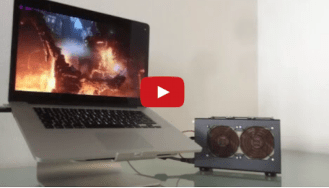
I have investigated drawing in 3D in Virtual Reality using the Vive VR Headset and Google Tilt Brush software. The Digital Maker Collective at Chelsea  now have both. I tried them out at the Edinburgh Festival this summer, and at a recent meeting in the 4D studios at CSM, when I also installed Tilt Brush on my laptop. In so doing I discovered that in order to be able to independently use this software and hardware effectively, I would need to acquire a top of the range graphics card extension (GTX 1070) to my MacBook Pro, as well as the VIVE: a very expensive option. I will therefore have to make the painting at either Chelsea or CSM. However, once made, I hope to  view the painting in VR using my own, significantly cheaper equipment.

I discovered a process that will help me do this. A recent release of Tilt Brush allows a 3D file to be uploaded to it, which could possibly be my 3D scanned image of Vanessa. This imported scan can then be used  as a 3D template for the painting, or an object within the painting.

http://vrscout.com/news/tilt-brush-adds-rotate-resize-import-3d-models-pictionary/.

Afterwards the painting can be uploaded to the Cloud, and downloaded to the iPhone to be viewed on a much cheaper VR headset.

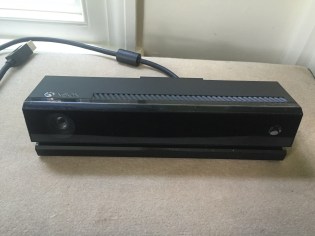
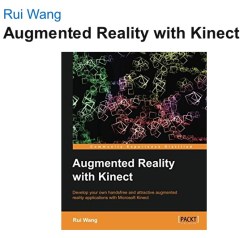
I now have two relatively inexpensive Bobovar VR headsets, having ordered them after trying them out at  the Lumen Prize at the end of  September.  I now need to identify a tracking device, possibly the Kinect, that can (with software) communicate with my iPhone in this headset. I have borrowed a Kinect from the Digital Maker Collective in order to conduct a test, and have ordered a book to hopefully explain  how this can be done. This experiment will determine whether it is possible to view, walk around and into an already created painting in 3D and Virtual Reality, without further need of the VIVE/Tilt Brush technology.
 

screen-shot-2016-10-01-at-14-49-45

GTX 970 attached to MacBook Pro

screen-shot-2016-10-01-at-14-50-46

 Vive at CSM 4D Studio  


screen-shot-2016-10-01-at-15-25-04

 3D painting in VR using Google Tilt Brush   

fullsizerender-45

My VR Headsets      

img_5081-2

Kinect from UAL Digital Maker Collective
fullsizerender-46

 Acquired book – I may need to program in C++


e. 3D Video Recording in Virtual Reality

I have investigated this emerging technology, as well as 3D video recording in Augmented Reality. I discovered a paper on the subject associated with a Kickstarter project (which has since been removed from the Internet). This spurred my interest to see whether this technology was possible.
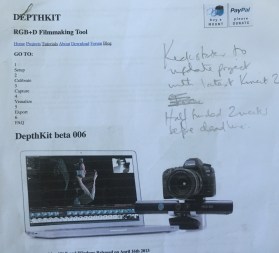
 

fullsizerender-47

DepthKit 3D VR Film making Tool

screen-shot-2016-10-02-at-14-45-03

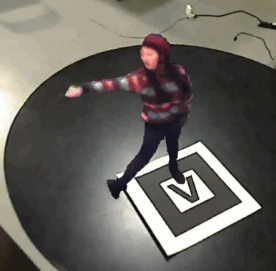
Double Me VR video recording in real time

I have since seen a demonstration of a similar technology (but it could be a developed version of the same thing) from Double Me, a company set up to research and provide these services http://www.doubleme.me/technology/.They are currently next door to Ravensbourne and are working alongside their Virtual Reality lab, using Ravensbourne’s seven Microsoft Hololens AR headsets imported from the USA. I viewed a ballerina dancing using the Hololens at the recent 2016 Lumen Prize giving. This was of substantially better quality than shown on Double Me’s website videos. Their CEO Albert Kim invited me to record up to a 10-minute VR video in his studio, and suggested I do this after they substantially upgrade their recording quality from 2K to 4K this November. http://www.doubleme.me/new-doubleme-promo-video-by-carl-white/
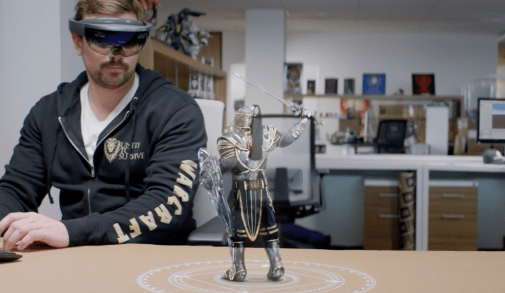
 

screen-shot-2016-10-01-at-16-19-07

Microsoft Hololens

Double Me are working on a project with the Royal Opera House to make a VR recording of an opera and show it there on a Holographic Display (being designed in-house and planned to be built in China).

f. 3D Animation of the drawn and painted figure

I have researched the tools I need. So far I have used Cinema4D/Bodypaint4D and ZBrush but only for exporting and rendering 3D scanned images to make the artwork I have already made. Additionally, as already explained, I have acquired hardware and software, namely a Wacom tablet for drawing, and Poser11, DazStudio, and iClone6 for creating 3D human characters and for animation. They are all installed on my Macbook Pro, but so far I have seen what they can do, but have yet to use them.

The software provides shortcuts to sculpting and animating the human figure and include male and female examples that can be altered using filters, with example animations that can be overlaid on the figure.

The resulting drawings, characters and animations can be viewed through the Hololens in AR or holographically, as previously described. To be viewed in VR they need to be imported into the software ‘Unity’, about which I know little, but can get help through the Digital Maker Collective, or possibly LCC.

g. Viewer interaction with the presented image

This interaction can be seen as an extension of any of the previously described projects. So far I have experimented with Arduino, proximity sensing, and audio. I have also experimented with Leap Motion, and will shortly extend this to the Microsoft Kinect. The animation software iClone, described earlier, is capable of linking to the latter to track human movement, which can be mirrored to create a 3D animation, or enable a viewer to replicate their own movements in the animation in real time.


3.To use this research to contextualise own practice

The contextualisation of my practice with those of other artists is an ongoing activity. It is informed by my research, my involvement in collaborative art projects, and by attending and participating in art exhibitions.

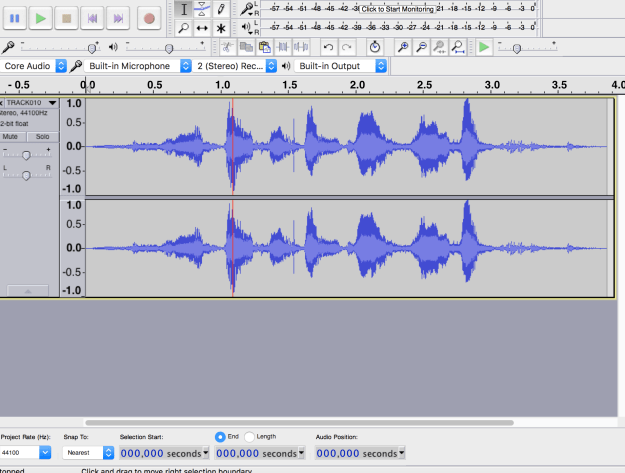
My sole experience of a collaborative project to date is a video/audio work entitled ‘Mother Earth’, made during the low residency earlier this year. Our group collaboratively decided on the project and how it should be constructed. My main contribution was the audio which I made with my wife Suzy, and edited using Audacity software
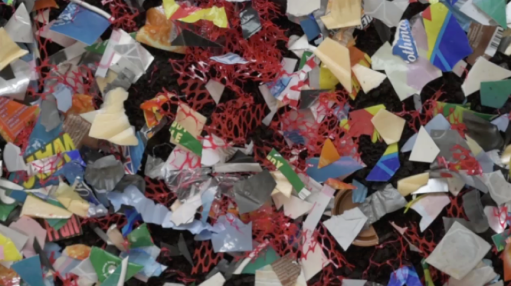
 

screen-shot-2016-10-05-at-21-34-41

Mother Earth

I participated in a week long pop-up show at UAL Chelsea, organised by the UAL Digital Maker Collective of which I am an active member. There I demonstrated use of the scanner and working with Arduino, sensors, and conductive materials. I will be doing the same at Mozfest 2016 at Ravensbourne at the end of October, and at the Tate Exchange, where the Digital Maker Collective will take over the whole of the fifth floor of the Switch House extension to Tate Modern, in February/March 2017.  Both events will be attended by the general public.


To produce distinctive artworks to support my research

This is largely covered by what I have already described. No doubt my ideas will develop over the rest of my MA, but I am now confident that I can achieve this objective both for material and immaterial born-digital artworks.


Key Factors influencing changes to my Project Proposal


I have reflected long and hard about the research and making I have done to date, and will be updating my Project Proposal accordingly. I feel that only building on life drawing, largely of the female form, is too limiting.

This is best illustrated by my experience developing ‘Metamorphosis’. Prof Stephen Farthing was rather excited at the idea of giving sculptures a voice, and envisaged an exhibition with a great variety of works. What would a AK47 weapon say? Or a pineapple? When introducing the concept of touch to initiate narratives, issues also arose about touching a sculpture of a naked female. This resulted in me changing direction and initiating Vanessa’s narrative by picking up a book with the same title as the Artwork.

Consequently, I now feel the need to broaden my agenda to the human figure, clothed as well as nude, male as well as female, and engaged in human activity, most probably dance.

My working title is now:

‘How technological innovation can provide new opportunities for the artistic presentation of the human form’.

My aims and objectives have thus also broadened:

‘To explore how far digital methods can extend the artistic presentation of the human form, and to demonstrate this by producing distinctive and differentiated artworks in both material and immaterial form’.

Making projects going forward

Until now my focus has been researching and making born-digital artworks where the final manifestation is in a material form, which I have termed ‘digital to physical’. I plan continue with my plan to divide the second year of my MA in two parts, first focusing on artworks where the final manifestation is in an immaterial form, which I refer to as ‘purely digital’, and second, using a mix of physical and purely digital to create my MA Show exhibit.

However, my work to date has led to my interest in applying for the UAL Chelsea Foundry Fellowship, and to do this I need to continue make further sculptures in the foundry at UAL Camberwell. Consequently, the material element of my MA Show exhibit will need to be another casting along the lines of my discussion with Tom and Richard who head up the foundry at UAL Chelsea, and who are the decision makers for the Foundry Fellowship.

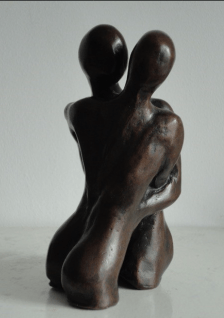
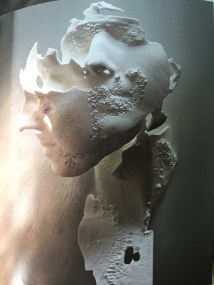
After talking about my practice to date and showing pictures of my work, both Tom and Richard seemed keen.  They are now sending me an application form, and would like me to keep them informed about my future work. The Fellowship is highly competitive. It is for 6 months, and for me, could start immediately following the completion of my MA. I expressed an interest in blending digital scanning and printing with casting by directly making the mould in castable PLA (with runners and riders attached and I have identified where I can do this). Also, that I was interested in producing a life sized bronze cast of the human body, and a morphed face, similar to the pictures below.
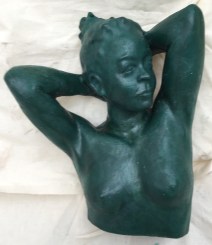
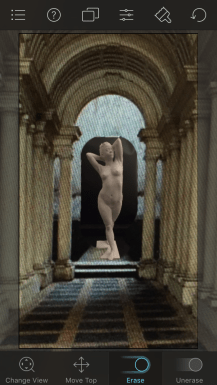
 

FullSizeRender 24

IMG_3008    img_2879

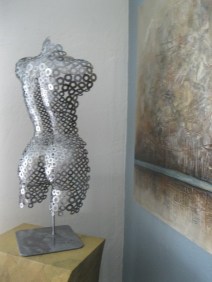
Sculpture ideas based on my existing wax and 3-D print  life sized in bronze
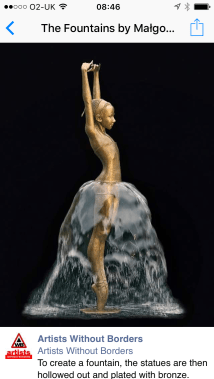
img_2986

screen-shot-2016-10-01-at-14-13-24  img_4800

Sculpture ideas based on the example of others

To achieve this objective, I must continue making digital to physical sculptures of the human form, using 3D scanning, photogrammetry, 3D image manipulation, metal casting and if possible bronze resin sculpting. In November, in order to make a self-portrait 3-D sculpture I am being scanned in the Veronica Scanner, a photogrammetry device used in a recent exhibition at the Royal Academy of Arts.

https://terencemquinn91.org/2016/10/24/veronica-scanner-i-am-the-model/

The comparison between born-digital artworks in material and immaterial forms has been explored in my Research Paper ‘Digital to Physical – Made to last’? Which addresses the question ‘Will functioning digital art be part of our future cultural heritage?’. This paper is having a huge influence on the decisions I will make about my art practice going forward after my MA. It has provoked an interest in undertaking a practice based PhD, to explore the use of emerging technologies to address the issue of conserving complex digital art installations. I have attended a PhD introduction event at CSM, have booked another at UAL Chelsea, and am going to a TECHNE open evening to learn about funding opportunities. Again this will influence the immaterial work I produce going forward during my MA.

My first idea for an immaterial artwork is to collaborate with Aurelie Freoua, a recent MA Fine Art Digital graduate and painter. The aim is to produce a 3D painting in Tilt Brush which the viewer can see, walk around and through, in Virtual Reality. A real life 2D large scale image of the painting, as the Virtual Reality viewer would first see it, will be projected on to a doorway. This is the image that the viewer will see as they put on the headset. They walk through the door and into the same painting in Virtual Reality. Aurelie will create the painting in Tilt Brush and I will create the environment to make and display it in VR. My plan is to make the VR painting using the VIVE of either UAL Digital Art Collective, or the 4D studio at CSM. I then hope to be able to view the painting in 3D and VR in my own much cheaper set-up as previously described. I will thus need to check out this possibility first.

My second idea is to make a collaborative work with my current life model and dancer, Vanessa Abreu. This will show 3D footage of Vanessa dancing in either AR or holographically. If used for my MA Show, I envisage a live performance alongside, say the holographic display, which would also be projected on to a large screen.

The typical work I am aiming to conserve for a PhD will involve viewer interaction, I therefore need to understand the mechanisms for creating such interactions. Consequently, I will need to extend my use of the Bare Conductive Arduino Touch Board, by using the recently released PiCap, to connect a Raspberry Pi3. For the same reason, I need to better understand Processing and Max MSP to create programs for interactive artworks. This will enable me to experiment with alternative sensors triggering visual art beyond the capability of the Arduino such as Video and Internet connection. I hope to use the proposed collaborative project with Romain Meunier, MA Visual Arts Resident Artist for the current academic year, as a vehicle for this learning experience. Additionally, I asked Alex May to participate in our Tate Exchange event and he will be putting forward a proposal. Again this can be another learning opportunity for me.

I am also thinking of organising a symposium on the conservation of digital art, and am already engaged in conversation with several possible participants, including Douglas Dodds, the curator of the digital art collection at the V&A, with whom I discussed this possibility at the Lumen Prize.

These activities will equip me to undertake both the Foundry Scholarship and a practised based PhD.

To be practical about the upcoming pop up show at the end of this term, I aim not to create any new work, but to show some of my digital to physical art not exhibited so far.
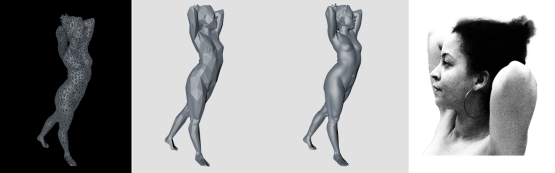
 

screen-shot-2016-10-01-at-13-39-24

Perspectives of Vanessa 

These four canvasses together make the 3m x 75cm artwork ‘Perspectives of Vanessa’ to be shown at the Pop-Up exhibition at the end of Unit 1. Possibly the first image above will be projected on to the canvas, so that it can be seen rotating in 3D. I have already made this video, just in case.

Wherever I am with all these activities, and in order to concentrate on making for my final MA Show exhibit, I will stop all further practice based research around the time of the next Low Residency and the Tate Exchange in Feb/March next year. I will then also decide whether to apply for a PhD, as applications need to be in by the end of April, in order to begin at the start of the next academic year.


Digital to Physical – Made to Last? Email Correspondence with Jocelyn Cumin, MA Conservation, UAL Camberwell

This Blog addresses personal communications for my Research Paper that cannot be referenced any other way.

CORRESPONDENCE WITH JOCELYN CUMIN, Leader MA Conservation, UAL Camberwell

From: Jocelyn Cuming <j.cuming@camberwell.arts.ac.uk>
Date: Friday, 26 August 2016 at 06:50
To:  Terence Quinn <t.quinn1@arts.ac.uk>
Subject: Please can we meet to discuss my research project

Hello Terry,

I have read with interest your research proposal.
It is indeed a major conservation/preservation issue and will loom much larger than the conservation of physical documents. It is not currently addressed as you say within University Education at UAL.

The problem of the ‘born digital’ has been addressed for a long time, for example see the work of the Humanities Advanced Technology and Information Institute of Glasgow University. You may enjoy reading an early publication by Seamus Ross who headed this institute and who now works for Toronto University. The publication is called “Changing Trains at Wigan’ Now, rather belatedly institutions such as the British Library are doing quite a lot in this area. Australia too has done a lot in this area such as the National Library of Australia and the National Archives of Australia. America and Canada too have been working a long time in this field.

Your research proposal is a good one and I think you could develop some quite simple guidelines for artists to follow. There are simple guidelines that artists can follow in relationship to the care of physical art. In the same way artists could do a lot to ensure their digital artworks last into the future – such things as establishing simple meta data, intelligently naming files and continuous backup and employing such strategies as refreshing and emulation. This would be very useful. ( Last year a group of conservation students wrote a little publication on the care of the physical.)

I looked through your bibliography. I am pleased to see you have included Tate as they employ a number of time based media conservators. It may also be worth looking at the work King’s college London is doing in their digital humanities course.

Good luck with the research. I would be certainly happy to have a conversation about it on my return in mid September,

Best wishes,
Jocelyn

From: Terence Quinn <t.quinn1@arts.ac.uk>
Date: Friday, 5 August 2016 at 11:31
To: Jocelyn Cuming <j.cuming@camberwell.arts.ac.uk>
Subject: Please can we meet to discuss my research project

Hello Jocelyn

I am writing my research paper for my MA Visual Arts – Fine Art Digital at UAL Camberwell and would appreciate a small amount of your time to discuss the Conservation of Born Digital Art, in particular its apparent (to me) absence in University Education in UAL or as far as I can see anywhere in the UK. Here is a link to my research question and a short synopsis.

https://terencemquinn91.org/2016/07/27/research-paper-proposed-research/

I am happy to come to you anytime after 21 August. My first draft is to be submitted by 5 September and final submitted on 5 October.

I would be very grateful for any input on this important topic.

Kind Regards
Terry

Digital to Physical – Made to Last? Alex May Interview 22 August 2016, Brighton

Planned Script (Not strictly adhered to)

Thank you for agreeing to talk to me about the subject of my research paper. I hope this has relevance to your work too. Would you mind if I recorded our discussion so that I may reference it in my paper?

Describe my research question.

Will functioning digital art be part of our future cultural heritage? Will only physical art survive intact over time? Can purely digital artworks continue to operate in the distant future and thus provide a digitally functioning legacy for generations to come?

State that you are particularly interested in his born digital work with Anna Dimitrui, Sequence.

I met him at the V&A Digital Design Weekend on 26 Sept last year.

Notice that the write up in the V&A only included Anna’s work on the project.

Ask Alex to describe it and what prompted him and Anna to make it. And to describe his contribution.

Questions

1. Alex, Do you think that it is important that art produced today should be available for future generations to enjoy? And why?

2. Do you think that this also applies to art produced using or relying on digital products and processes? And why?

3. I know that you use digital processes in a lot of your work. Please could you briefly describe them or any future digital technologies you are interested in using in your practice. Ask about Artist in Residence at Uni of Hertfordshire and Robot Companions project.

4. With particular reference to ‘Sequence’ What digital processes does it rely on? If any of the hardware or software used became redundant could your work be shown as you originally intended? Is your work documented in a way that it could be shown or reproduced and exhibited as you intended?

5. Do you think, with the massive advances in technology that today’s important digital artworks will be able to be seen as the artist intended in say the next century?

7. If not, why not?

8. Do you think that art institutions and fine art schools such are addressing these issues? Ask about Uni of Hertfordshire and whether that include art conservation in their curriculum in particular for born digital work and digital installations.

9. Do you think that conservation of their work is practiced by most digital artists? Do they document their work in a way that it could be reproduced without them?

10. What more do you think needs to be done?

11. Are there any questions or areas I have not explored today that you think I should have covered?

Thank you Alex

Please turn your sound up full and forgive the background cafe noises.

Crafting Our Digital Futures

As part of V&A Digital Design Weekend 2015

ISBN: 978-0-9576868-4-7

26 Sept 2015

Sequence

Alex May and Anna Dimitrui

image

Sequence. As seen on screen. VR view on Oculus Rift

 ‘Sequence’ is a bio-digital installation created by artist Anna Dumitriu, the emerging technology of whole genome sequencing of bacteria, which the emerging technology of whole genome sequencing of bacteria, which makes it possible to study the entire genetic blueprint of an organism. The project considers what this new technology, which is revolutionizing the study of bacteria, means to us personally, culturally and socially.

Dumitriu’s artistic research has led to her learning how to sequence an entire bacterial genome, from the complex and delicate process of preparing the DNA, to sequencing and assembling the resulting data (around 2.8 million base pairs of DNA long) of the Staphylococcus aureus bacteria that lives on her own body.

He learned that this organism, which currently lives on her with no obvious effect, is likely to be a human pathogen, and under different circumstances could make her ill or even kill her. She also found out that it has several significant antibiotic resistance genes: the blaZ gene, which confers resistance to beta-lactams, such as penicillin; the norA gene which confers res fluoroquinolones such as ciprofloxacin; and the tet(38) gene conferring resistance to tetracyclines such as doxycycline. It can be treated with methicillin and so is not a form of the famous methicillin resistant Staphylococcus aureus (MRSA).

The preparation of the DNA for sequencing is time consuming, and very high precision (Dumitriu needed to dilute the DNA so precisely that 1000000 fragments of it would cover 1mm of the flow cell used in the sequencer). Originating from fluorescent chemical compounds. Each nucleotide binds to a different coloured compound, and Each nucleotide binds to a different coloured compound, and at each stage digital image is taken. The machine then builds up a picture of there and outputs a raw file of data. This data can then be assembled using software. Assembled genomes can then be compared to other assembled genomes to reveal how infections spread as minor changes in the DNA show how closely related one organism in a species is to another.

‘The bacterium I have studied is one of millions which go to make up my microbiome. The detailed knowledge of this one organism only serves to highlight how little knowledge we have of the workings of our own bodies, as we reflect on the sublime microbiological worlds we carry with us. (Dumitriu)

Reflections on MA Show 2016

FullSizeRender 29

My comments are focused on MA Fine Art Digital, on our first year display, and then on my exhibit ‘Metamorphosis’.

Firstly, the final year exhibits were inspirational and set a high bar for us next year. The range of works was incredible, from paintings by Aurelie, artistic photography by Clara, visual performance by Anthi, sound performance by Manuel, hanging Narwhale skeleton by Jiarqi, abstract picture videos displayed on over 20 iMacs by Donald, to virtual reality by Charles (long listed for the Lumen Prize 2016) to name but a few. In the closing moments of the MA Show Group Crit I expressed my thanks to all the final year students (who had by now all passed their MA, some with distinction) on behalf of the first years. Their exhibits truly made us proud to be part of the MA Fine Art Digital Course. Jonathan’s efforts to get the show up and running were beyond the call of duty and many of all our displays owe a lot to him for their final presentation.

The first year display was impressive too. I won’t go through them all as they were in the same well lit space (shared with MA Designer Maker first year) and are pictured below. Congratulations to all.

There were some lessons to be learned which I hope will be remembered for our final year display.

Firstly, it is up to all of us to help prepare the display space, not just the few who spent a lot of time doing this. My special thanks goes to Celine.

Secondly, we need to help our fellow exhibitors to display the works of online students and others who cannot be there. We cannot leave it up to Jonathan who has enough to do over the show. He put up David’s work and was heavily involved in Yvonne’s, for example. I helped Leonie and Sharon. I am sure others helped too, but I think next year us students should all pull together and only rely on Jonathan for advice with our final displays.

Thirdly, we should resist Jonathan’s suggestion that our exhibits need only be cataloged online (so I am told by Donald). Nick Gorse, our UAL Camberwell Dean offered to pay for a brochure and it was declined. All other courses seemed to have one and they were certainly picked up by many visitors. I am not even sure that visitors were aware that the final year students had an online brochure. We should do both. This means we need to decide on our exhibits in enough time to take pictures and narrate our works in time for the brochure to be produced.

Fourthly, Labels should not be produced at the last minute by UAL Admin. They were a fiasco. No-one had time to check them before the start of the show. As they are transparent they only show on a white background. Whilst the need for consistency is recognised, I personally would have preferred printing in white, so that they showed up on my dark brown plinths. David and Patrick said that they would duplicate the format from this year and make their own, as none of their narrative was included in their labels. I noticed that Clara had to hand write her narrative on her label – and that was for the final year display! Again, we students need to provide our input in good time. Not everybody did so.

Fifthly, the first year display was invigilated by a few people only, and sometimes not at all. Celine and my attempts at getting a schedule together was responded to by a familiar few. Please pull together next year guys and girls.

Sixthly, lets ask that the security personnel do not turn off the power supply to all the exhibits in rooms that need it. We don’t turn off our computers at the plug at home every night, so why do security feel the need to do so? Apparently they need a request from Jonathan. Otherwise, Donald’s 20 odd iMacs need to be rebooted every morning for example. An hour’s exercise. Here are pics of our work after I invigilated one morning and switched the first year exhibits back on.

Some needed Donald’s passwords. Others needed to provide instructions how to bring them to life – including my own with no sound, but we did not provide any documentation about how this could be done. We just cannot let this happen next time. A professor from another art university specifically went to visit mine when I was not there and the sound did not play. How many others visited when these displays were not on? Not very professional and a big disappointment for the viewers.

So we all need to provide this documentation, just in case – there could be an overnight power cut or the security person the night before was not told about the request not to turn off our exhibits.

I would be interested if anyone else has points we could learn from. For our final show we need it to be on time, right first time, well communicated, and everyone must know how to recover the work that they are invigilating.

All that said, we all deserve a pat on the back

Finally, I was very pleased with my exhibit. I managed to combine practically everything I had learned and made during the past year: 3D Scanning, 3D Software, 3D Printing, Lost Wax Bronze Casting, Bare Conductive Arduino with adapted programs (sketches), voice integration using Audacity, proximity sensing and conductive materials. I owe thanks to many (in particular Ed, Jonathan, Becky in the foundry, Billy at CCM digital fabrication, Grzesiek at Wimbledon Digital Media, Chris Fellows and fellow enthusiasts at CCW Digital, and Prof Stephen Farthing at UAL Chelsea) and including all who contributed to my learning experience in any way especially to my fellow first year students and visiting artists who provided a crit of my work.

Over and out on this subject as i now have to get on with my Research Paper.


Digital to Physical – Made to Last? Prof. Paul Coldwell Interview 27 July 2016, UAL Chelsea

Last Import - 1 of 1

Paul Coldwell 27 July 2016, UAL Chelsea
Interview for my Research Paper

Planned Script (Not strictly adhered to)

Thank you for agreeing to talk to me about the subject of my research paper. I hope this has relevance to your work too. Would you mind if I recorded our discussion so that I may reference it in my paper?

Describe my research question. Give Paul my Synopsis to read.

Questions

1. Paul. Do you think that it is important that art produced today should be available for future generations to enjoy? And why?
2. Do you think that this also applies to art produced using or relying on digital products and processes? And why?
3. I know that you use some digital processes in some of your work. Please could you briefly describe them or any future digital technologies you are interested in using in your practice.
4. Does exhibiting any of your work rely on any of these digital processes? If so, if any of the hardware or software used became redundant could your work be shown as you originally intended? Is your work documented in a way that it could be shown or reproduced and exhibited as you intended?
5. You were probably there to enjoy digitally inspired artworks from the 1960’s onwards. Are there any in particular significant works that you remember displayed at that time? Have you been able to see it again more recently? If so was it functioning in the same way? If not, would it if it were displayed now?
6. Do you think, with the massive advances in technology that today’s important digital artworks will be able to be seen as the artist intended in say the next century?
7. If not, why not?
8. Do you think that art institutions and fine art schools such as UAL are addressing these issues?
9. What more do you think needs to be done?
10. Are there any questions or areas I have not explored today that you think I should have covered?
Thank you Paul.

Audio File of the Interview

Please turn your sound UP.

The interview started with my introductory comments followed by this recording:


Research Paper – Proposed Research

Digital to Physical – Built to Last?

image  ‘Sequence’

Will functioning digital art be part of our future cultural heritage?An examination of built in obsolescence in digital art contrasting two installations, one physical ‘Still Standing’ by Antony Gormley and the other a purely digital artwork ‘Sequence’ by Alex May and Anna Dumitriu.

Terence M Quinn

Abstract

The proliferation of new digital technologies employed by artists raises increasingly pressing questions related to preserving their work for our cultural heritage. Will only physical art survive intact over time? Can purely digital artworks continue to operate in the distant future and thus provide a digitally functioning legacy for generations to come? Is it possible to conserve digital artworks for the long term? Is this matter being adequately addressed by artists themselves, by those who collect their work, and by art institutions?
This research paper examines these questions and contrasts two contemporary installations, one physical ‘Still Standing’ by Antony Gormley and the other a purely digital artwork ‘Sequence’ by Alex May and Anna Dumitriu.
The conclusions reached are worrying for those concerned with the legacy of purely digital art practice. This paper argues the need to provide future generations with working examples of contemporary digital art. If artists care, it is observed that they are not doing much about it, perhaps because they don’t know how. Curators, government bodies, museums and institutions involved with this issue are aware of the urgent need for it to be addressed but for present practitioners it is a matter of too little, too late.

Bibliography

Interviews – Carried Out

David Byers Brown, MA Oxon, Course Leader Computer Animation, Digital Visual effects, Architectural Visualisation, University of Kent, Personal Interview Notes Spring 2016
Prof Paul Coldwell, Professor of Fine Art, Researcher and Artist, Chelsea College of Arts,
AudioFile on WordPress Blog 27 July 2016

Interviews – Agreed

Alex May, Agreed, 22 August 2016, Brighton, Re ‘Sequence’,
Bridgette Mongeon (by her invitation), a Texas based sculptor and author

Interviews – To be Requested

Prof Stephen Farthing, Professor of Drawing, Rootstein Hopkins University Chair of Drawing (personal mentor, Chelsea College of arts)
Prof Fred Deakin, UAL Chair of Interactive Digital Art, Central Saint Martins
Richard Colson MA, Artist and Subject Leader Computational Design, Ravensbourne and 2015 Lumen Prize Judge

Jocelyn Cumin, Course Leader MA Conservation, UAL Camberwell
V&A Curator, to be identified
Pip Laurenson, Head of Collection Care Research at Tate

Books – Obtained

Anthony Gormley ‘On Sculpture’, Thames & Hudson Ltd, 2015, ISBN 978-0-500-09395-5
3D Technology in Fine Art and Craft, Focal Press, Taylor & Francis Ltd, Bridgette Mongeon, 2016, ISBN 391-3-685-6-7222,
The Fundamentals of Digital Art, Ava Academia, Richard Colson, Jan 2007, ISBN 391145153687
Digital Art Conservation: Preservation of Digital Art: Theory and Practice, Ambra |V, Vienna 2013, ZK||| Centre for Art and Media Karlsruhe, ISBN 978-3-99043-538-0 (An Academic Study sponsored by the EU)
Theorising Digital Cultural Heritage: A Critical Discourse, Fiona Camaron and Sarah Kenderdine, The MIT Press, 2007, ISBN 978-0-262-51411-8
Preserving Our Heritage: Perspectives from Antiquity to the Digital Age, selections of papers and commentary by Michelle Valerie Colonna, Neal-Schumuman, Chicago 2015, ISBN 978-1-55570-937-2
Preparing the Workforce for Digital Curation, Committee On Future Career Opportunities And Educational Requirements for Digital Curation, The National Academies Press 2015, National Research Council, Washington USA
Preserving Complex Digital Objects, Janet Delve and David Anderson, Facet Publishing UK 2014, ISBN: 978-1-85604-958-0
Time and Bits: Managing Digital Continuity,Margaret MacLean and Ben H.Davis, Getty Publications, 31 Mar 2006, ISBN 978-0892365838
From Dust to Digital: Ten Years of the Endangered Archives Programme, Maja Kominko, Open Book Publishers, 16 Feb 2015, ISBN: 978-1783740628
Curation: The Power of Selection in a World of Excess, Michael Bhaskar, Little Brown Book Group, June 2016, ISBN 9780349412504

Books to Review

Copper and Bronze in Art: Corrosion, Colorants, Conservation, Getty Trust Publications, David A.Scott, 2002, ISBN 9780892366385
Digital Visual Culture: Theory and Practice, University of Chicago Press April 2009, Anna Bentkowska-Kafel, ISBN: 9781841502489
Museums of Tomorrow – an Internet Discussion (Issues in Cultural Theory), Centre for Art and Visual Culture, UMBC/Georgia O’Keeffe Museum, 2016, ISBN 1890761079
New Roles for New Times: Digital Curation for Preservation, Tyler Watson and Katherine Skinner, Association of Research Libraries, March 2011, ISBN 9781594078620
Digital Curation: A How-to-do-it Manual, Ross Harvey, Facet Publishing 2010, The Facet Preservation Collection, ISBN 9781856047333
Digital Curation in the Digital Humanities: Preserving and Promoting Archival and Special Collections, D R Harvey and Gillian Oliver, Neal Schumen Publishers, New Zealand, April 2016, ISBN 978-0838913857
Digital Preservation and Metadata: History, Theory , Practice, Susan Lazinger, Englewood, Colorado: Libraries Unlimited 2001, ISBN 1 56308 777 4

Conferences/Exhibitions

Reflections on From Clay to the Cloud: The Internet Archive and our Digital Legacy, April 29,2016, Caitlin, report on the exhibition Jan 23-Mar 20 2016, at the Laband, Internet Archive Blog, WordPress. Curator: Carolyn Peter, director and curator of the Laban Art Gallery at Loyola Marymount University.
Crafting our Digital Futures, part of V&A Digital Design Weekend 2015, ISBN 978-0-957-0-9576868-4-7, Sequence Alex May & Anna Dumitriu
Digital Media in the Upper Rhine Valley: Conservation-Restoration-Sustainability, Open Space 2014: Exhibition, Lecture & Talk (The starting point for the digital art conservation project was the insight that the conservation of digital artworks is fundamentally threatened as a result of the rapid obsolescence of digital technology, and that adequate theoretical as well as practical standards have yet to be developed and introduced at an institutional level).
Techarcheology: A Symposium on Installation Art Preservation, Steve Seid, Experimental TV Centre, MAIN, NAMAC, Issue Winter 2000, CA(2000)
Media Art Histories Conference 2015, Montreal Nov 2015, http://www.digitalmeetsculture.net
Sunken Cities: Egypt’s Lost Worlds, British Museum, Thames and Hudson June 2016, ISBN 978-0-500-98175-7

Videos

What Do Artists Do All Day? Antony Gormley, BBC4 1 July 2014, http://bbc.in/1kqsqkT

Academic Articles

Cesare Brandi, Theory of Restoration: Conservation of Contemporary Art, Francesca Valentini, PhD, University “Roma Tre”, Rome, Italy (concerning the relationship between Cesare Brandi’s *Theory of Restoration and the Problem of restoring objects of contemporary art), http://www.teleculture.com/archive/2005_01_01_TCarchive.html
Conservation and Documentation of New Media Art: The debate between the Italian Theory and International Strategies, a paper by Laura Barreca, italianacademy.columbia.edu/sites/default/files/papers/Laure%20Bareca.pdf
ZKM, Digital Art Conservation, Three-Year Project (2010-2012), EU program INTERRED IV Oberrhein. See proceedings Artech10 Table of Contents (of Papers)
Assembling Traces, or the Conservation of Net Art, Annett Dekker, NECSUS 3(1):171-193, DOI: 10.5117/NECSUS2014.1.DEKK, European Journal of Media Studies, Amsterdam University Press, June 2014
Conservation Strategies for Modern and Contemporary Art: Recent Developments in the Netherlands, http://www.academia.edu/7991626/Conservation_Strategies_of_Modern_and…Contemporary_Art 2005, Elizabeth Nijhoff Asser
Developing Strategies for the Conservation of Installations Incorporating Time-Based Media with reference to Gary Hill’s Between Cinema and a Hard Place, Pip Laurenson, JAIC 40 (2001):259-266
The Media Art Notation System: Documenting and Preserving Digital/Media Art, Richard Rinehart, Leonardo Vol 40: Issue 2: Pages 181-187 (Issue publication date: April 2007)

Web Articles

Cherishing the Legacy, Art Cart: Saving the Legacy, RCAC’s study, Above Ground: Information on Artists III, Special Focus New York City Ageing Artists, 95% of artists have not archived their work, 2015/6
Art360, current research project by DACS Foundation, dacsfoundation.org.uk/art360
The Betamax vs VHS Format War, Dave Own, MediaCollege.com, last updated 2008-01-08
Best Practices for Conservation of Media Art from an Artist’s Perspective, Raphael-Lorenzo-Hemmer, GitHub.com/antimodular, Sept 28 2015
The Most In-Depth Mega Man Legacy Collection Interview You’ll Read Today: We discuss the philosophy and tech behind the anthology with Capcom and Digital Eclipse, Jeremy Parish UsGamer.net 8/21/2015
Virtual Heritage – Wikipedia, http://www.thefullwiki.org/Virtual_Heritage, 22 June 2016 (Definition and 3D reconstruction of Dudley Castle in England as it was in 1550)
The V&A’s Computer Art Collections, acquired collections of Computer Arts Society and Patric Prince archive form the basis of the UK’s emerging national collection of computer art, http://www.vam.ac.uk/page/d/digital-nd-design/, 22 June 2016
Digital meets Heritage, http://www.digitalmeetsculture.net/article/digital-meets-heritage, 22 June 2016
How EGI is supporting Digital Cultural Heritage, EGI.eu, Steve Brewer, 2012, European Grid Infrastructure and Technical Resources for the Preservation of Digital Heritage
Digital Preservation Coalition 2016, DPA2014: DPC Awards for safeguarding the digital Legacy- Finalists, University of Glasgow, also see 2016 Awards, http://www.dpconline.org/advocacy/awards
How do we Protect our Digital Legacy after Death? Clive Coleman, Legal correspondent, BBC news, online resources such as Twitter, Facebook etc. (Who owns the data? Not you! Story of Becky’s mother, Louise who could not get access after her daughter’s (age 19) death).
Preserving Progress for Future Generations, Feb/Mar 2015, Research Information
Cultural Heritage, Wikipedia, definitions and list of worldwide organisations, 22 June 2016
ADA – Archive of Digital Art (Former Database of Virtual Art), a site for recording/archiving your work, elmcip.net/node/6641, Elizabeth Nesheim, initiated 2013 (one of initiators is Christiane Paul)
Journal on Computing and Cultural Heritage (JOCCH), abstract of areas covered

My Research Paper – Digital to Physical Built to Last? Question & Abstract

RESEARCH PAPER – MA Visual Arts – Fine Art Digital

Terence Quinn – Student ID QUI15472637 – Version 1 – 18 July 2016

Digital to Physical – Built to Last?

Will functioning digital art be part of our future cultural heritage? An examination of built in obsolescence in digital art contrasting two installations, one physical ‘Still Standing’ by Antony Gormley and the other a purely digital artwork ‘Sequence’ by Alex May and Anna Dumitriu.

Abstract

The proliferation of new digital technologies employed by artists raises increasingly pressing questions related to preserving their work for our cultural heritage. Will only physical art survive intact over time? Can purely digital artworks continue to operate in the distant future and thus provide a digitally functioning legacy for generations to come? Is it possible to conserve digital artworks for the long term? Is this matter being adequately addressed by artists themselves, by those who collect their work, and by art institutions?

This research paper examines these questions and contrasts two contemporary installations, one physical but made digitally ‘Still Standing’ by Antony Gormley and the other a purely digital artwork ‘Sequence’ by Alex May and Anna Dumitriu.

The conclusions reached are worrying for those concerned with the legacy of purely digital art practice. This paper argues the need to provide future generations with working examples of contemporary digital art. If artists care, it is observed that they are not doing much about conserving their work, perhaps because they don’t know how. Possibly, as they have not been taught how. Curators, government bodies, museums and institutions involved with this topic are aware of the urgent need for this important issue to be addressed, but for present practitioners and most past work it is a matter of too little, too late.

For the future, the view is taken that digital art conservation issues are so wide, complex and rapidly changing at an accelerating pace, that a comprehensive methodology for preserving digital artwork is unattainable. In effect, a resolution lies with the training of artists to recognize the need, and to take their own steps to facilitate conservation of their own individual digital artworks, as far as is reasonably possible. In that way the best will survive to characterise today’s digital art movement (however it is named in the future) to provide a valued cultural legacy for generations to come.

IMG_3977 2 (1) 314 words

My Research Paper – But what is the question?

Terence Quinn – MA Research Question – 2016

The context for my Research Question

MA Project Proposal – How technological innovation can provide new opportunities for the artistic presentation of the life model

Making to date – Digital to Physical: Primarily of a female life model – experimentation with full body 3D scanning, laser cutting, 3D digital sculpting, high quality digital printing on canvas, 3D laser sintering (3D printing), video & voice recording/editing, Arduino with sensors and conductive materials, bronze casting, and combining the previous elements (for finished artworks see Addendum)

Future making – Entirely Digital: For the human form – projection mapping, 3D digital sculpting/painting, and 3D holographic (Peppers Ghost) display/projection

Research Question – Short list of three

What I am writing about, what I don’t know about it, and why I want to know about it (rationale) – Subject, enquiry, and rationale for discovery

Is the life model as much an artistic contributor to the artwork as the artist?

I am researching the views of artists, the artists’ muse and informed observers because of my interest in giving the model a voice and to understand the artistic contribution of the life model in figurative art

Digital to physical – made to last: An examination of the unintended consequence of built in obsolescence in purely digital art. Will only physical artworks survive intact over the passage of time?

I am researching the practice of Alex May and Antony Gormley to compare artists whose work relies on today’s digital processes, and to use them as examples to understand whether purely digital artworks can continue to operate in the distant future and thus provide a digitally functioning legacy for generations to come

Breaking the mold: Research into new digital approaches for casting bronze and aluminium sculptures of the life model.

I am researching innovative digital technologies for making bronze and aluminium sculptures due to the current lengthy and inaccurate procedures involved in the 5000 year-old lost wax casting process. I hope to discover whether casting techniques can be substantially speeded up and improved on so that metal sculptures of the human form can be more easily made by the 3D ‘digital’ artist.

 Addendum (finished artworks)

  1. Contoured one metre full body sculpture of a nude woman in 244 pieces of MDF
  2. ‘Unrequited Love’ – A large touch narrative head and shoulders painting of a woman
  3. ‘Giving the Model a Voice’ – A touch narrative 2.25 x 1.0 metre triptych digitally printed on canvas of a morphed nude woman from an enhanced 3D scan
  4. 3D printed hollow bust of a nude woman (25 cm tall) with touch narratives
  5. 3D printed hollow full body sculpture of a nude woman (70 cm tall) in ‘Rodin style’ with touch narratives
  6. Bronze hollow bust of a nude woman as an ‘industrial style’ artefact recovered from the sea
  7. ‘Metamorphosis’ – submission to Lumen Prize 2016 of the above full body sculpture and bronze (submerged in salt water) mounted on transparent acrylic plinths with touch narratives made by the model

VanessaScan

Midnight Inspiration for Lumen Prize Entry

I had another brainwave at the very last minute before the midnight deadline tonight for our Lumen Prize entry.
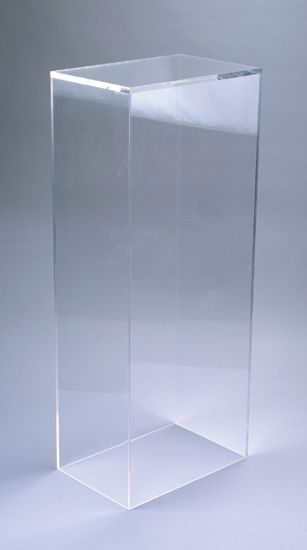
Plinths will be of highly transparent acrylic so that the sculptures appear as though they are floating in the air.
The bronze sculpture will be encased in water to emphasise that it has been recovered from the sea and to protect the audience from trying to touch it’s very sharp edges.
Vanessa’s narratives will be activated by touching the base of the Rodin style non-conductive plaster sculpture. How is this possible you may ask? But it is.

image

Lumen Prize Entry

On impulse I sent a last minute entry to the Lumen Prize 2016. See lumenprize.com. This will also be my first year MA exhibition piece this July.

Screen Shot 2016-05-29 at 15.04.00

   Sample Touch Narrative (extract)

METAMORPHOSIS: Artists Terence Quinn & Vanessa Abreu (life model)

Look, Touch and Listen and you will be entranced by the humanity in this digitally created touch narrative physical artwork.

The underlying concept of ‘Metamorphosis’ is ‘Giving the Model a Voice’, an artwork of a life model that is substantially influenced by the artist’s muse as well as the artist, and includes the model Vanessa’s narrative in her own voice. This is in stark contrast to the usually silent life model setting and resultant work. Vanessa is a Laban MA trained contemporary dancer and choreographer, who started life modelling after she damaged her knee. She now models for the Royal Academy (the Royal Drawing School). The work tells Vanessa’s story in two linked contrasting sculptures that play her narrative when either is physically touched. The ‘concept of the gaze’ is thus confronted by the viewer interacting with the work, which humanises Vanessa’s nude images resulting in her quiet and emotionally evocative voice dominating the viewer’s attention rather than the visual. Their focus is now listening to her story unfold – “I started modelling because I was stressed”. The technology used is invisible to the audience as it is hidden within the sculptures which will be mounted on two transparent plinths set side by side.

The very latest digital methods (accessible to a UAL first year Fine Art Digital MA student) were used to make a full body 3D scan of Vanessa in a nude dance pose in traditional (Rodin) style and then 3D printed to make a 75cm tall plaster sculpture. The 3D print also became the starting point for the contrasting 5000 year old lost wax casting process, to make a very different hollow bronze bust of Vanessa as though she was an ancient industrial artifact recovered from the sea – representing her ‘distress’ and ‘stress’ over the period when her career suddenly changed through force of circumstance.

MAKING PROCESS

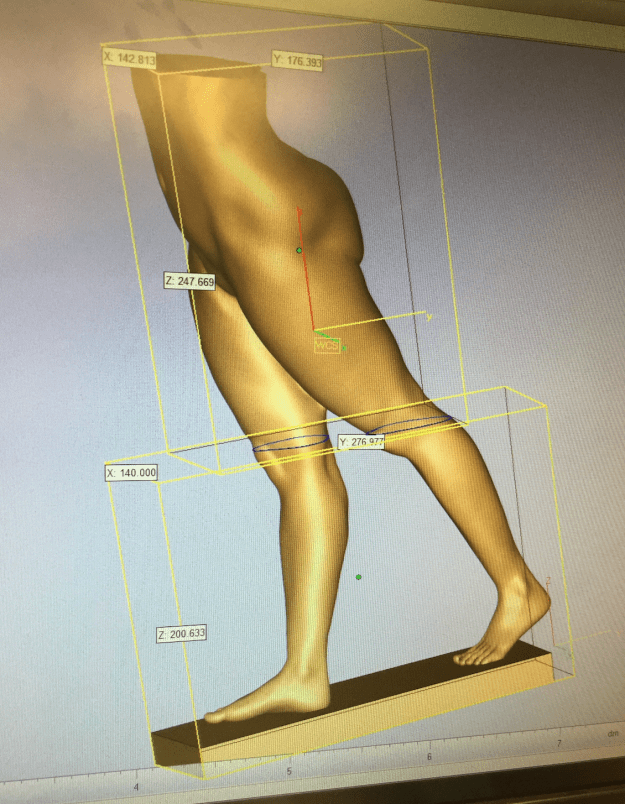
3D Scan (part)  VanessaScan

Tidying up and Re-topologising the scan to 1M Polygons using ZBrush – Thank you to my friend Nick for the much needed assistance with ZBrush

IMG_3331 2

3D Print preparation – Thank you to Bill Nicholson at CSM for your much needed assistance with a tool that only £8000 can buy!

Screen Shot 2016-05-29 at 15.21.46

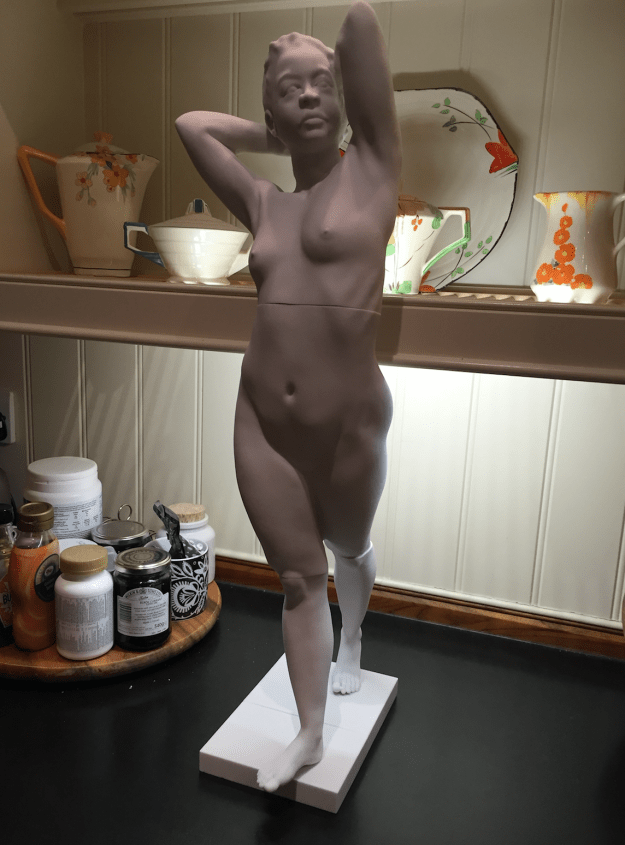
3D Print (Sintering) in four parts – Thanks Bill Nicholson at CSM for letting me use your Digital Fabrication Department’s facilities

Assembled3DPrintVanessa

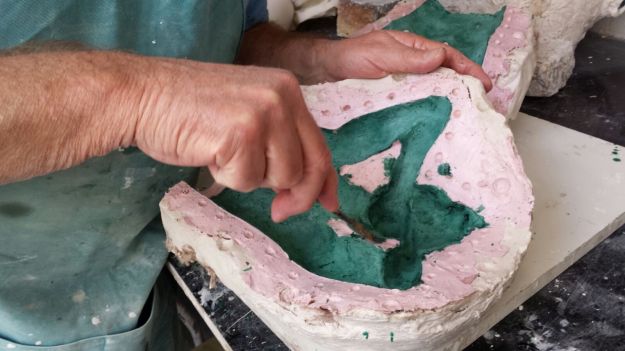
Mold made from 3D printed bust – Thanks Becky for all your help in the Plaster Room and the Foundry at Camberwell

IMG_2861

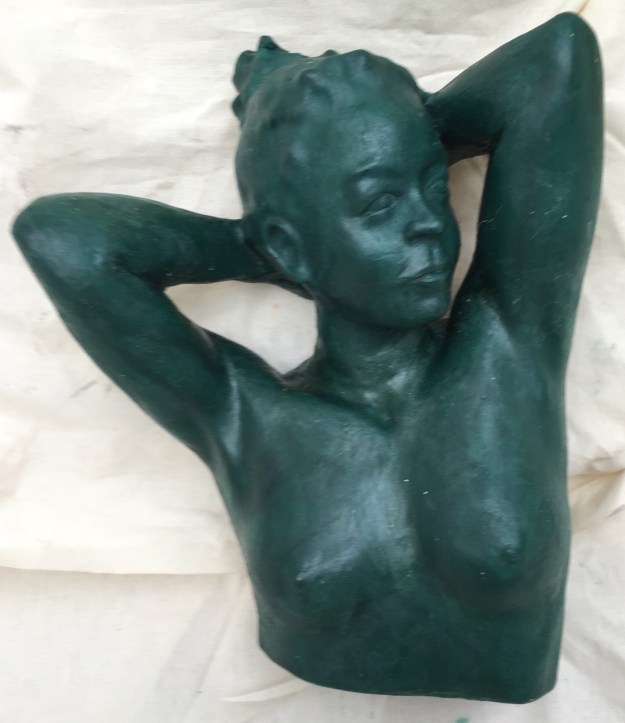
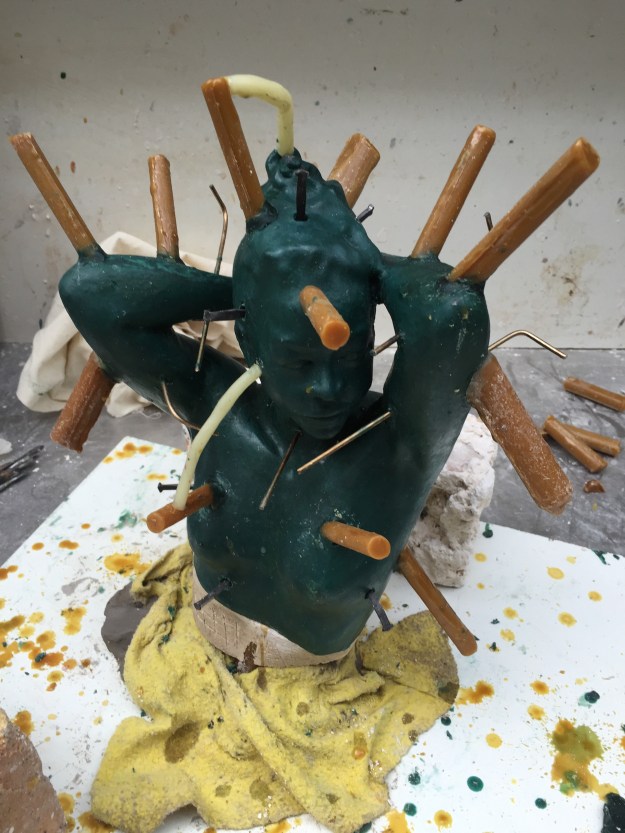
Resultant Hollow Wax Model

FullSizeRender 24

Wax model shortly before making mold for Bronze casting

Bronze in Process

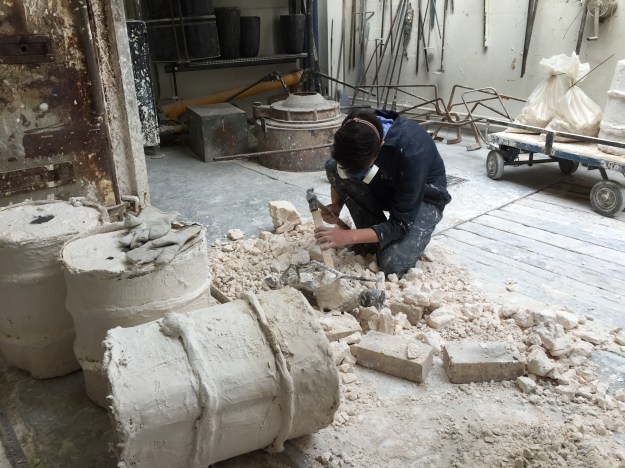
Into the furnace to make the mold for the Bronze Sculpture using the lost wax method (the wax model will be no more – leaving a void in its place into which the Bronze will be poured) – Thank you Becky

BronzeFoundry

After Pouring the Bronze into the Mold

IMG_3285

A Sculpture Student breaking his Bronze out of the mold (as I was at the same time)

IMG_3297

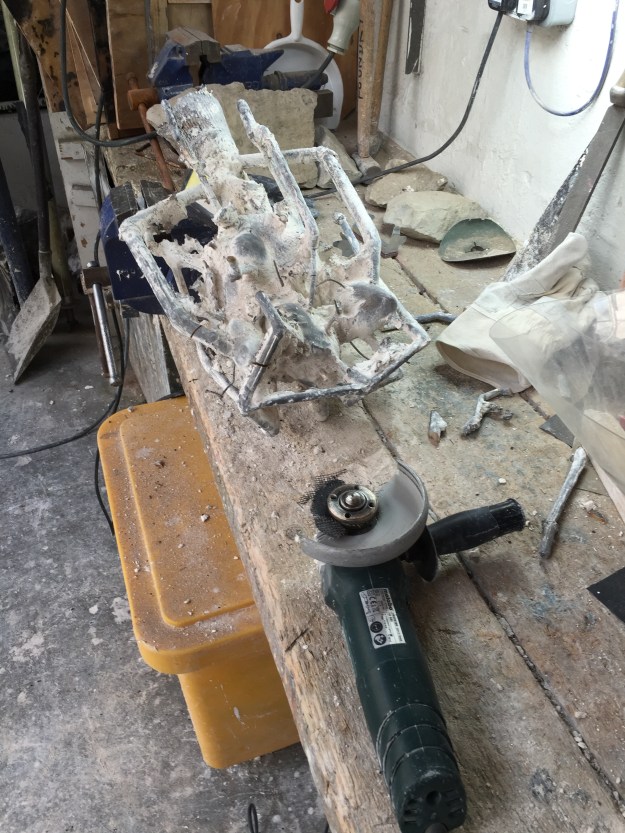
Cleaning up the freed Bronze casting – cutting off runners (used to channel the molten bronze into the mold) and riders (used to release the air when the bronze is poured)

IMG_3301

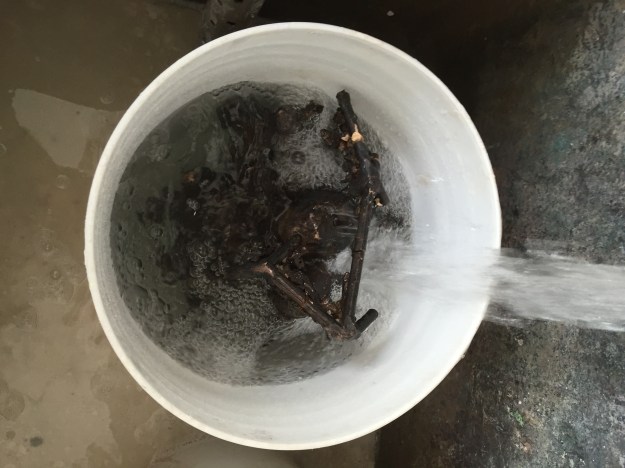
An Undignified End  –  After Jet HosingIMG_3306

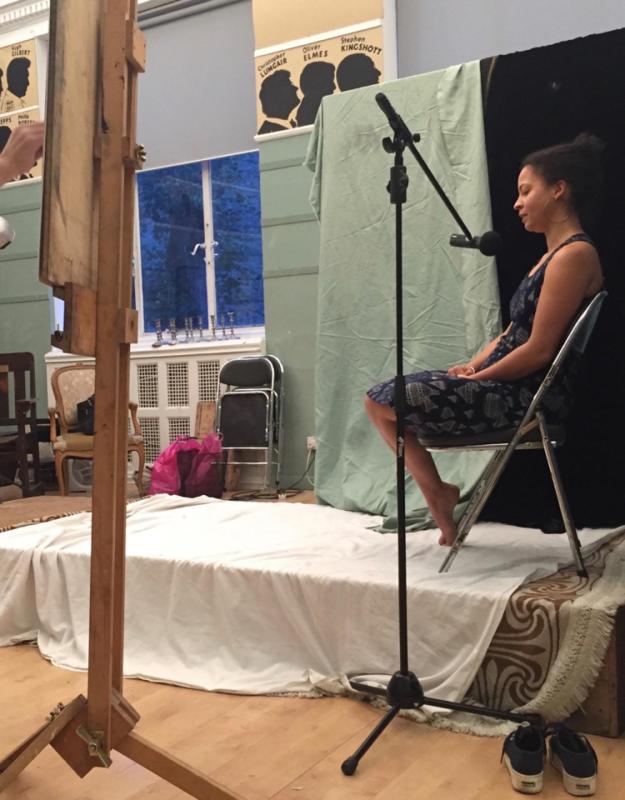
Making Voice Recordings  Narrative Recording 1

Editing the Narratives in Audacity (thank you Ed for the group lesson)

Screen Shot 2016-05-30 at 16.10.05

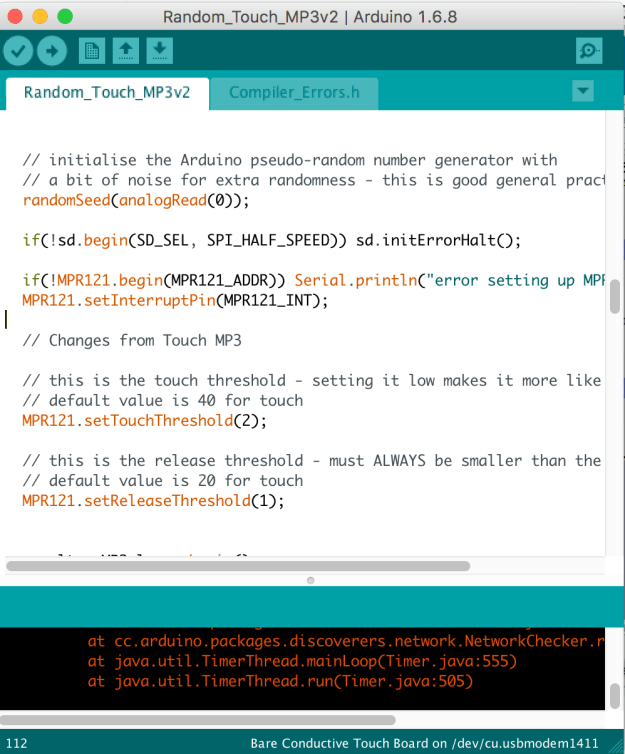
Programming the Bare Conductive Arduino Touch Board  – Thanks CCW Digital for Collaborative Education and in particular Grzesiek Sedek at UAL Wimbledon for your patience and advice

Screen Shot 2016-05-30 at 16.14.34

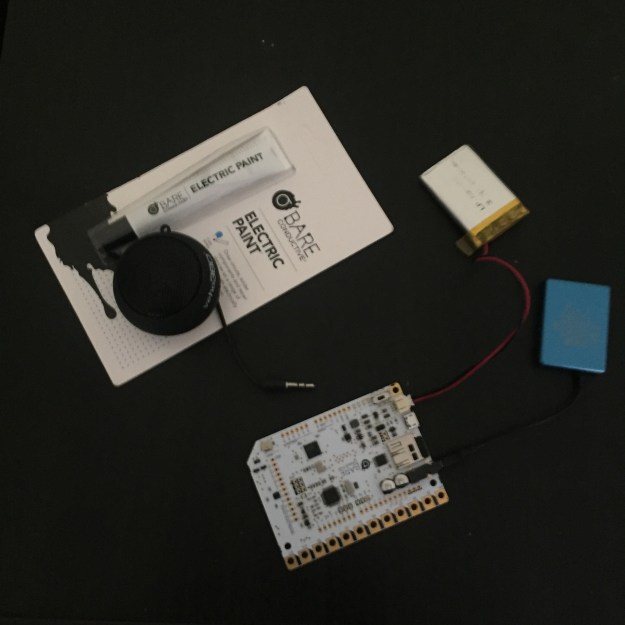
The Touch Board and attachments hidden in the Sculptures  – Thank you Grace Atlee MA Illustration for introducing me to BareConductive which gave me the idea in the first place

IMG_3329

Clear Transparent Acrylic Plinths – Thanks Jake Biernat for the presentation which showed his work displayed in the same way – obviously I liked it

IMG_3330

The End Result  Screen Shot 2016-05-29 at 15.04.00

HARDWARE & SOFTWARE USED

Occipital Structure Sensor attached to a mini iPad with retina Display with the cloud based App ItSeez3D

ZBrush to tidy up the 3D scan to increase the 3D image quality (re-topologise) from 200,000 to 1 Million polygons

3D Laser Sintering to 3D print the full body sculpture in 4 pieces which were then glued together and hand finished (because of part shrinkage during the printing process)

Lost wax casting to make the bronze sculpture from the 3D printed bust. The bronze alloy used was first tested to ensure that it was sufficiently electrically conductive.

H1 Zoom recorder to make two hours of recordings in WAV format on a micro SD card

Audacity software on MacBook Pro to edit the recordings to short narratives and convert to MP3 on micro SD cards for the Touch Booard below

BareConductive Touch Board (a derivative of the Arduino Leonardo) to provide the proximity sensing (without external sensors to the sculptures), Bluetooth capability to transmit the recordings wirelessly, with rechargeable Lipo battery and an overall size that would fit within the sculptures

Conductive paint brushed inside the 3D printed sculpture

Arduino Sketches adapted from Open Source options to increase the proximity sensitivy so that random narratives would be triggered by touching the external surface of the 3D printed sculpture (rather than the conductive paint itself which is inside an over 3mm thick non conductive plaster sculpture)

Two transparent acrylic plinths to confound the viewer as to how the artwork operates technically