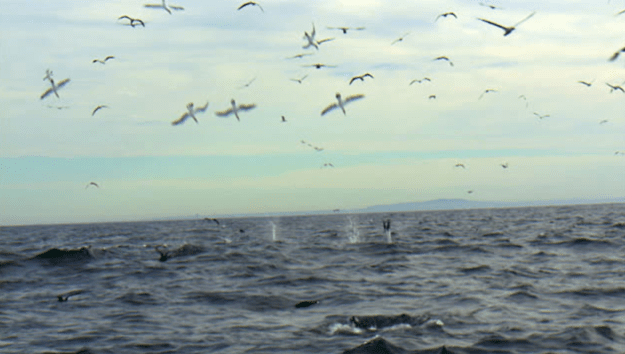
I had intended to film this myself, leaning over the side of a boat with a camera dangled half in and half out of the sea, while attracting seagulls to dive and screech. No mean feat for a complete novice film producer!
However, I was rescued by two events. Firstly, Lucy Orta said that this was not the main event of my project and that it was therefore OK to use (expensive for the right quality) stock library clips. Secondly, while my Vuze camera is due to be delivered shortly, they have not yet released a waterproof case, and do not expect to until around August/September. After my MA Show!
I have looked at stock film from Getty Images, and Michael is going to point me towards some others. I will find out more when Michael and I meet this coming Friday.
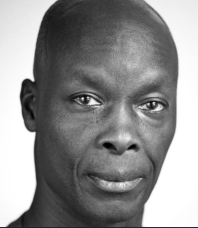
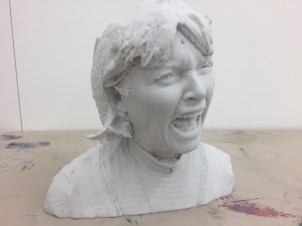
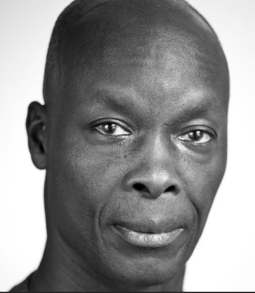
Two sculptures of characters in the book ‘The Optician of Lampedusa’ are included as part of my MA final show exhibit. One is of Theresa, the optician’s wife who was in the rescue boat, and the other is one of the surviving refugees. My wife Suzy is the actor playing Theresa, and Leo Wringer is the actor with the role of the refugee.
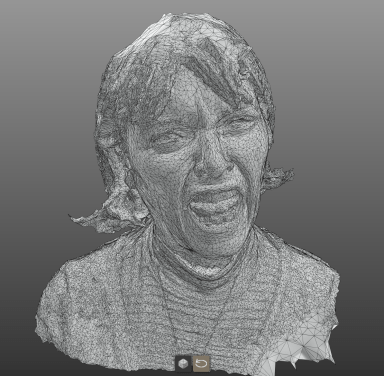
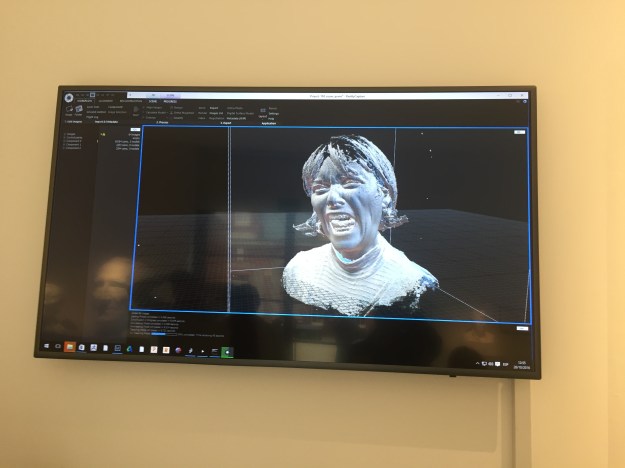
I have already described how Suzy was 3D scanned using the Veronica Scanner loaned to the Royal Academy by Factum Arte. This produced fantastic detail, much more than can be achieved with other scanners. The scan file was used in the Digital Fabrication Department at Central Saint Martins to 3D print a 20 cm tall maquette, the largest size that could be produced by CSM’s Project 360 Selective Laser Sintering (SLS) 3D printer. The maquette was then used to decide how to make a life sized bust of Theresa by breaking up the sculpture and printing it in several pieces. This was a difficult process, as I had to double the dimensions while leaving the facial features intact. Each piece needed to fit within the maximum dimensions of the 3D printer. It is now being 3D printed in ten parts, which I hope to collect next Friday: A jigsaw puzzle for me to assemble later. I know that the fit will not be exact as shrinkage during and after printing occurs, and at different rates because several printing runs are needed to produce all the pieces of the finished sculpture. My experience with 3D printing ‘Vanessa in pose’, made in only four parts, indicates that a fair amount of post-production work will be involved.
Earlier this week I arranged a 3D scanning session in the basement Photographic Studio at Camberwell. This was to scan Leo in pose as a refugee. In preparation, I consulted with Michael Meuller who is advising on a treatment and script for the actors, on what poses Leo should make. We agreed on three based on the following ideas from Emma Jane Kirby’s book.
First moment – the rescue.
The man they had just pulled from the water was hysterical, jabbing his finger back down to the water. He kept repeating a word over and over again but he didn’t seem to understand any Italian.
It was Matteo who thought to try and speak in English.
“What do you want?” he urged him. “We can help if you tell us slowly in English”
The man looked at them imploringly, tears pouring down his face.”Please,” he said , holding his hands together as if in prayer. “Children, there are many children”
Second moment – meeting his rescuers again at the reception centre.
It didn’t matter that they didn’t share a language. He seemed to understand how worried his rescuers were to see how he was faring. He gave them the thumbs up to re-assure them he was okay then inclined his head on his open palm to indicate he was just very tired. He held his hand over his heart and pointed his finger at his rescuer. You gave me life, he was saying. You gave me life.
Third moment – ceremony at sea on the boat that saved him to commemorate first anniversary of the rescue.
The man turned from the sea and faced his rescuer, holding out his hand.
“Come,”he said, looking him squarely in the eye. “Come and be with us.”
So they joined hands, looking out to sea, and the refugee began to pray. He could feel the collective pulse of them all, throbbing in his own wrists. He could feel their shared lifeline.
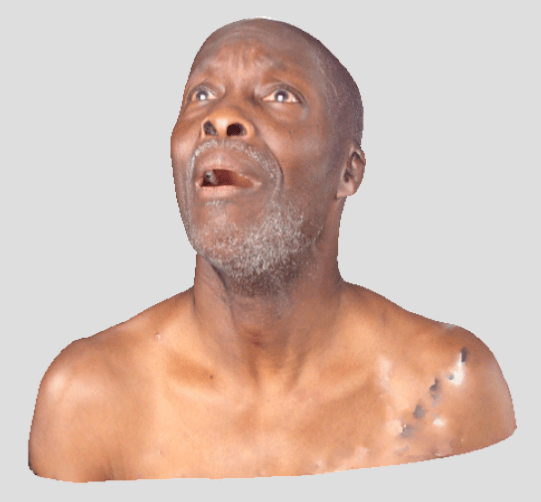
After that I had to consider the limitations of the scanning equipment and software I used, namely the Structure Sensor attached to a mini iPad with Itseez3D software. The bust profile does not easily accommodate outward hand gestures, as they fall outside the viewing frame. So during the session Leo improvised each pose in an acting sense and I directed him taking into account the technical limitations of the equipment. Here are 2D pictures of some of the results.
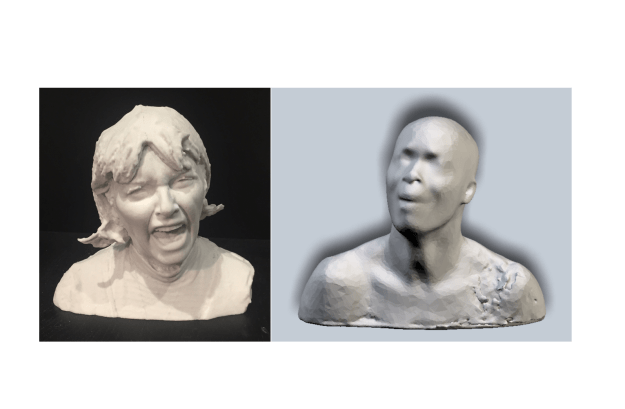
The images were viewed by Leo, Michael, Suzy and last but not least Becky for advice about the best to use to make a foundry bronze. Technical difficulties with some of the poses (for example, printing or lost wax processing the pointing finger, or digital imperfections due to Leo moving) ruled them out. We also had to consider the juxtaposition with Suzy’s pose, first seeing with horror refugees drowning in the sea. Finally we chose this combination.
From the texture image it can be seen that the raw 3D scan has lost quite a lot of detail, notably around the eyes. However we thought that the haunted look created suited the disturbing message we were trying to convey. It was necessary to make a small 3D print (6 cm x 6 cm) of the two sculptures together to see the effect in reality. I 3D printed Leo as the refugee in this pose overnight. It took eleven hours at high quality at 50% density!! I have another meeting at CSM Digital Fabrication next Friday when I will arrange for a 20cm tall maquette to be 3D printed using their SLS printer. At the same time I will discuss how the 3D file should be split in order to make this sculpture life size too.
These sculptures will materially influence the script for the holographic video of the characters’ narratives. I have set up a meeting next Friday evening with Michael, the scriptwriter and Suzy to move this aspect of the work forward. Leo is off to Mexico for a week to teach professional actors how to perform Shakespeare, and then to select the best for roles in a production.
Passagens is a series of four debates, hosted by Prof Lucy Orta, UAL Chair of Art and the Environment, which I have attended recently. I felt that these debates directly related to my planned MA final show exhibit.
Drawing on the current debate following the recent UK vote to leave the EU, postgraduate students, UAL staff, alumni, practitioners and researchers in this field, were invited to join the Passagens series of reading groups, which offers a broad historical context and insight by artists and curators whose work evolve around the themes of migration, social sustainability and the environment.
During one debate a film was shown called ‘Les Sauteurs – Those who jump’. The film was about refugees from across Africa, who leave their homes to travel from as far as Mali and the Ivory Coast. They end up hiding in woods near a huge triple layered fence segregating the border with Morocco, and for them , the gateway to Spain and the rest of the EU. Their challenge was to jump the wall. One refugee died trying. Some had tried many times, and were in these makeshift camps for up to two years. Many sustained injuries from failed attempts. The Moroccan police and military sought out these camps, and burnt what little belongings the refugees had, and individuals sustained beatings if caught either running away or between the layers of fencing while trying to jump. Only if the refugees landed on Moroccan soil after jumping three fences could they seek asylum. Some did. Which encouraged others to try. Many were interned in camps in Morocco, and later sent back as economic migrants. Only those seeking political asylum, escaping persecution were allowed to leave, most trying for destinations in the EU. Even then, many are sent back to the EU country they first landed in, despite travelling elsewhere to join family members. It was very moving, invoking much empathy from the audience. And a feeling of helplessness.
I was able to participate in the debate and discuss the subject and my work with Lucy Orta. This was followed up by a tutorial in her office at LCF.
I explained in more detail the aim of my MA exhibit, namely to invoke empathy from those who viewed it. To engender a softening of attitude towards refugees in this situation, whether economic migrants or those escaping persecution. Perhaps, a groundswell of opinion in UK would cause the UK government for example, to help more people, particularly lone children, in this situation. We in the UK cannot cope with a flood of refugees but I feel that we can do a lot more. However, current attitudes of the electorate lean in the opposite direction. My exhibit is a small contribution to help change this attitude for the better. So that we can engage more with our moral compass, rather than put our economic interests first.
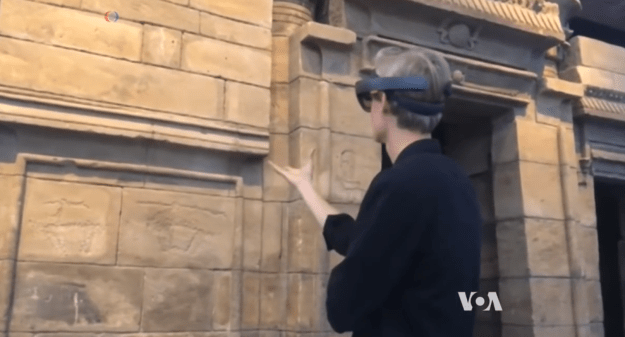
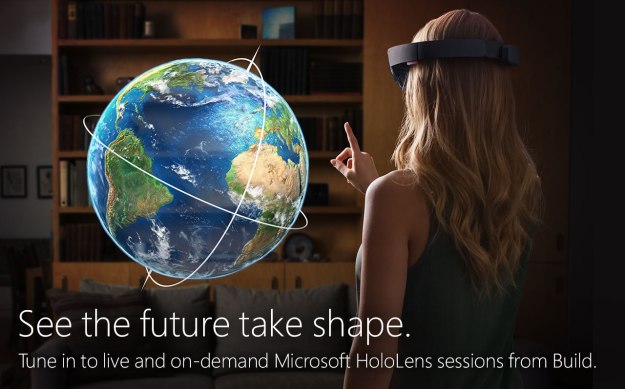
I also showed Lucy the three layers of my proposed work: a background film of seagulls diving and screeching as portrayed in the book ‘The Optician of Lampedusa’; two life-sized sculptures, of the wife of the optician who was in the rescue boat, and a refugee who was pulled from the water and survived; and a holographic view of the same people narrating their experience, with the first two layers visible in the background. In order to better understand the latter, Lucy tried the Hololens glasses to see examples of animated and speaking holograms. I explained that Mixed Reality was very new, where holograms are projected into real world, and in my case in front of the rest of the exhibit.
Her reaction was good, but she felt that all layers together would be overload. Each could perhaps operate on their own, or the exhibit could consist of less elements. For example, the background film could be shown with the holograms only. I explained that I had two audiences at the same time, as most viewers would not be seeing the holograms as someone using the glasses would probably do so for the duration of the actors’ narratives, say five minutes or so. and the other viewers would therefore not see what was happening. I suppose that I could project the actors conventionally, but this only adds a fourth layer and compounds the issue.
We talked about not making the sculptures life-sized, but leaving small versions on a shelf alongside the main exhibit. The idea being that they did not dominate the main message created by the holograms and the background video. I also asked whether I should subtly change the seagulls to drowning heads in the video, and this idea was immediately rejected. We also discussed whether the refugee should be alive or dead in the piece, and concluded that it would best serve the message if he were alive, as in reality he would not otherwise be in a position to speak about his experience. Obvious really.
Lucy referred me to a video called Superflex Kwasa Kwasa. It is about two islands in the Indian Ocean between Madagascar and Mozambique. One called Mayotte decided to become French again, and thus became part of the European Union. It is the outermost part of the EU being a 14 hour flight from Paris. The two islands are only 76 km apart and families can be split between the two. Yet to travel from the sister island to Mayott means that you are treated as a refugee. Boats patrol the seas to deter travel between the two islands.
Finally we discussed the space in which the piece would be exhibited. I said that this would necessarily be a compromise as I will be sharing space with other MA finalists. I have an issue with the space anyway. In the basement, which is in darkness, one would see the video and the sculptures if they were spotlighted, but not the holograms which require a dim light. The Hololens would also only be available for a few performances when I am present (they cost a great deal). In the sunlit rooms above, the opposite is true. The only layer that would be clearly seen are the sculptures. Additionally, the composition may be affected by the person or persons I am sharing the space with. Ideally I want the viewers to hear at least the seagulls in the background video, and possibly the narration without headphones. I have discussed sharing a space with Alasdair, who wants to show his video with sound without headphones. Perhaps we could use the same projector and sound equipment, but alternate each piece. I have to think further about the overall composition related to either space, and the people I may be sharing it with. Lucy suggested that I make up my mind what I need and make an early strong request for it. Those that leave it too late or are too easy-going usually get what is left. I said that we are deciding as a group of students how to curate the space.
Lots to think and make decisions about. Lucy is happy to see me again when my ideas are further developed. I look forward to that.
I have already mentioned in an earlier blog that I was finding it difficult to get sufficient interest in my research proposal, and where there was, I could not find a Phd supervisor available this coming year. Here is the story so far.
I went to two PhD open days at CSM in December, but felt that facilities in my field of interest available to me as a PhD student were insufficient, and therefore it was a less suitable University for me. I am already using CSM digital fabrication and digital media 4D facilities and technical support, albeit ‘under the radar’. However these are explicitly off limits as a PhD student, as CSM Kings Cross is apparently for BA students only, so a lot less easy to get away with using them as a bona fide CSM post graduate student. Their tutors also seemed to be a lot more comfortable with purely academic PhD’s than practice based. So I opted to apply to CCW instead.
At CCW, I could continue to use CSM Kings Cross facilities as I have been doing, and I like the less commercial and more art school feel of CCW, particularly Camberwell and Chelsea, which both have foundries to support my current practice (which CSM does not). However, I made the interview but was not offered a place. The key interviewers really did not understand my proposal to create immersive experiences of past digital art installations for our cultural legacy. They thought that it was merely another, but novel, method of documentation. They completely missed the point. perhaps because they had very limited experience, if any, of developments in Virtual and Mixed Reality. I later found out that the most senior interviewing professor had been physically sick after trying an early VR headset. That may have sealed my fate!!
I went to an open day at Oxford University, Ruskin School of Art recommended to me by Prof Stephen Farthing. I had the opportunity to discuss my proposal with one of the new professors who had recently joined their faculty from the Royal College of Art. He was most helpful and suggested that Oxford Ruskin was not the best place for my particular line of research, suggesting that I contact a specific PhD supervisor he recommended. Ruskin support for digital art, in particular digital fabrication and with no Virtual Reality was also extremely limited. I later met an Oxford/Ruskin DPhil student who presented at a digital conservation conference at the Jerwood gallery. She said her experience with support at Ruskin for her DPhil research suggested that the Ruskin professor was probably right to deflect me from applying to Oxford. I therefore contacted and subsequently applied to RCA, but during supervisor negotiations, she said that she was not the best person, and referred it to two other professors, who responded in the same way. So that application failed too.
My application to Kingston University went much better. I had previously met their head of postgraduate research at a PhD funding conference at UCL, who after discussion, invited me to apply to Kingston. I was interviewed by a professor who was very familiar with the Factum Foundation (who use scanning and 3d printing to resurrect ancient architectural sites such as Palmyra), and who saw similarities with my practice and the potential of my research for cultural legacy. However, they invited me to reapply next year, as despite wanting to offer me a place and to support an application for LDOC funding this year, they could not find a suitable supervisor.
Then after a tutorial by Dr Nick Lambert, a professor at UCL Birkbeck and Head of Research at Ravensbourne, I asked if I could give him my ‘elevator pitch’. He immediately got what I was on about and offered to be my PhD supervisor with access to both Universities he worked for. He needed to get a joint supervisor from Birkbeck, and referred my application to him. A similar outcome to Kingston. Great idea, bit full up at the moment. Please try again next year.
By now I am getting somewhat frustrated, so I thought why not do the research anyway for a year. This time under my own steam, without the umbrella of a PhD. So I applied for the Mead Fellowship, which I wrote about in my previous blog. Fingers crossed I said, but sadly, and despite encouraging words from the organisers, I did not make the first cut. There were 220 applications, and others were more deserving.
On reflection, I have now made a decision. I will not apply for any more PhD’s this year (I was thinking of UCL Slade and Cambridge University). I will instead carry on my own research, unfunded if necessary. This will enable me to decide whether my research captures enough interest and will test feasibility. Hopefully enough to consider making further enquiries and PhD applications for 2018, and after I have passed my MA.
In the meantime, I have been invited by a senior curator at the V&A (who curated the David Bowie exhibition) to follow up with him to see if there is interest from Douglas Dodds, the senior curator for the V&A Digital Art Collection. Further, during my exhibit at the Tate Exchange, I had a discussion with someone who recommended that I approach the Arts and Humanities Research Council for funding and support under their collaborative PhD track. Here’s what they say about it on their website:
ARHC Collaborative Doctoral Awards
Collaborative Doctoral Awards (CDAs) provide funding for doctoral studentship projects, proposed by a university based academic, to work in collaboration with an organisation outside of higher education. They are intended to encourage and develop collaboration and partnerships providing opportunities for doctoral students to gain first-hand experience of work outside the university environment and enhance the employment-related skills and training a research student gains during the course of their award.
The projects also encourage and establish links that can have long-term benefits for both collaborating partners, providing access to resources and materials, knowledge and expertise that may not otherwise have been available and also provide social, cultural and economic benefits to wider society.
I will follow this up.
Finally I am angling to ‘Do a Donald’ (inside joke) to continue in some guise at UAL Camberwell next year.
Tomorrow I participate in the third of four Tate Exchange events organised by the Digital Maker Collective, of which I am one of the early members, and a lead for a Virtual Reality exhibit. So far the Digital maker Collective has taken over the whole 5th floor of the Switch House extension to Tate Modern on 8th and 22nd February this year, and will do so again on 8th and 22nd March.
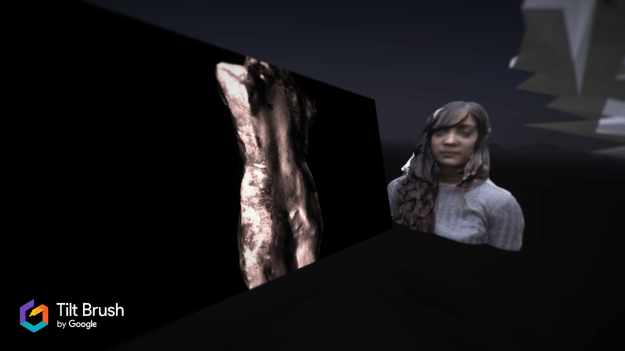
My Virtual Reality group consists of several students and alumni from across UAL, both BA and MA, at Camberwell, CSM and Wimbledon. We have all learnt to use Google Tilt Brush, a 3D Virtual Reality painting application on the HTC Vive, so that we can provide this experience for Tate Exchange visitors. This has been very popular and we expect a similar response tomorrow.
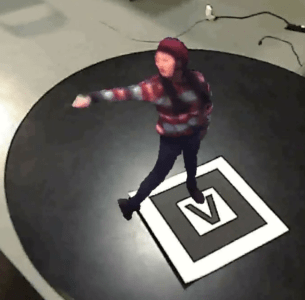
Last time we also demonstrated and let visitors experience mixed reality with the Microsoft Hololens. This is where 3D holograms are projected into the real world environment of the Tate. Most people who have tried it are amazed by what the Hololens can do. A viewer can physically walk all around the holograms which can also speak and move, as is the case with a dancing ballerina. or a lesson given by a weight-lifter. This experience is also helping me understand how to use this media in my final MA show this July.
Tomorrow, we will also scan visitors, 3D print their scans, and import these into the HTC Vive so that they can be viewed in virtual reality.
I have been trying to find a PhD supervisor for this project, with limited success so far. Two universities are interested UCL/Birkbeck/Ravensbourne as a jointly supervised PhD and Kingston University, but both have said re-apply next year as either the willing supervisors need some of their existing cohort to qualify first, or they do not have an appropriate supervisor at present.
So I applied for the Mead Fellowship to undertake an independent project.
Usually there are about 30-40 applications for the Mead Fellowship with 2 being awarded after a three stage selection process. I am waiting to see whether my project makes the first cut. Fingers crossed.
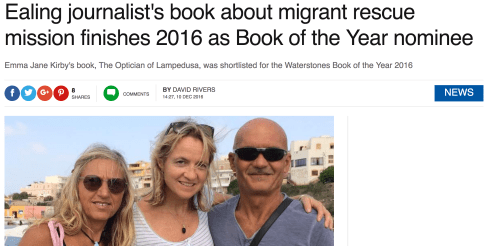
My exhibit is based on the book ‘The Optician of Lampedusa’, by Emma Jane Kirby, BBC European Correspondent, who also made a short documentary report for BBC Radio on which the book was based. It is published by Penguin, and was shortlisted for Waterstones book of the year 2016. I have used it with the permission of the author for this educational project, who said that she would very much like to attend the private view of the MA show. I hope that she can make it. I am also meeting her to discuss the project after she has finished covering the upcoming French elections for the BBC in mid May.
This project plan is very much a first draft, that I will use to discuss with all the parties involved, including my fellow MA Fine Art Digital students when we start to plan our MA show as a whole.
PROJECT PLAN FOR MA SHOW
KEY STEPS
Decide on treatment, discuss with advisors, prepare script and brief actors.
Make background video of seagulls underwater with Vuze camera, transitioning on repeat to refugees in the water.
Make life sized sculptures of the two actors, and possibly two hands together.
Make Hololens videos of narrators.
Make show set up and install.
Include fall back plans for all stages
STEP 1 – Decide on treatment, prepare script, discuss with advisors and brief actors
Meeting with filming, sound and script advisors (start before 16 March when Leo, the ‘refugee’ is 3D scanned). This should include consideration of the final show set up set up in its allocated place and space available. A schedule needs to be agreed in advance.
Filming of the sea
2D or 3D? 360-degree or not? Viewed using VR Headset or not?
Sound stereo or spatial?
Film location and time needed on location? Who makes arrangements?
Film length?
Who will film and sound record?
What equipment is needed and where to source it? Who does this?
Who will carry out post production?
Who will set up in show location to achieve the chosen viewer experience? (TQ)
Fall back plan: Use the existing YouTube video of seagulls only. Need to check quality when projected. Or just use the film of screeching seagulls conventionally in 2D with or without 360-degree viewing capability.
2. Filming of narrators using Hololens Mixed Reality (MR)
What is to be narrated in general terms by each actor; did the male refugee die or survive? Interacting dialogue or separate?
Sound stereo or spatial?
Film location (green screen facility – UAL Wimbledon ideal)? Check availability and book it early.
Film length?
Who will film and sound record?
What equipment is needed and where to source it?
Who will carry out post production? Need to import scalable video of actors into Hololens? Possibly need to do this through Unity or Unreal Engine software.
Do we, can we, film a spectator view for the show, where the viewer is seen in the film in real time? Need a second Hololens to do this. Can I borrow one?
Who will set up in show location to achieve the desired viewer experience? (TQ)
Write and issue scripts (MM)
Brief actors, rehearse and film (MM, TQ, SQ, LW). Agree schedule in advance.
Fall back plan: Use film of actors made against a green screen and add to film edit of seagulls/heads in the sea. Or just use actor’s sound recordings. Hololens then set aside
3. Creation of life-sized head and shoulder sculptures of the narrators
How should Leo, as the refugee, be posed (narrating, in the sea, or in the boat? Terrified, calling in the water, reaching out to rescuers, drowning, numb or relieved in the boat? The wife of the optician is already decided (screaming first seeing refugees in the water) as work is already in progress.
Additional scan and 3d sculpture of hands (only) holding together (black in white male or white female?) as refugee being pulled into the boat – the recurring dream image of the optician.
Material for the scans/ Bronze for refugee, and mixed bronze (refugee hand) and aluminium cast or white 3D print (rescuer hand).
Fall back plan: 3D print at CSM and do not attempt to create foundry bronzes.
STEP 2 – Make background video of seagulls underwater with Vuze camera, transitioning on repeat to refugees’ heads in the water
Acquire Vuze 360-degree camera (arriving March) and learn how to use it.
Acquire underwater kit for the Vuze camera (availability yet to be announced? – Check with Vuze) and test in a pond.
Determine the best way to add sound (possibly spatial sound) to recordings, how to edit it, and set up in a show space.
Determine location for filming (possibly Lampedusa, an Italian island between Italy and Tunisia) and make arrangements to go there. Need a sunny day.
Film underwater from a boat or jetty in chosen location. Two films, one with seagulls and the other without, including sound (which should, if possible, also transition to human voices).
Determine which software to use to create and add images of heads of drowning refugees to empty sea, and to transition between this and the film of seagulls diving. Possibly use iClone, Poser, or Daz3D stock 2D/3D animations of heads.
Integrate film and sound, and edit. Screen rushes and use feedback to create final cut.
Decide if going to allow the viewer to look around the 360-degree film with or without a VR headset. Kinect tracking or Jack MA show type arrangement?
STEP 3 – Make life sized sculptures of the two actors, and possibly two hands together
The 3D scan of the wife of the optician of Lampedusa has already been 3D printed 20cm tall in plaster. This was used to visualise how to dissect the head, leaving the face intact, so that it can be 3D printed life sized in several parts (It cannot be printed in one piece due to the size of 3D printer’s maximum print dimensions). This will be printed before the end of March.
Assemble the parts to form the life-sized bust, and finish.
Arrangements have already been made to 3D scan Leo, the actor narrating the part of a refugee. This will take place in the Photography studio on 16 March. Need to take several scans, representing the different poses already described, and to ensure good quality results. Also need to scan hands together and apart. I will need to get someone to scan for the hand of the rescuer. As I have limited time (1 hour) I need to decide on number of scans and poses in advance.
Take the chosen 3D scan to CSM Digital Fabrication to dissect as previously described, in order to make a full-sized head and shoulders bust of the refugee. This will provide a back-up position in case there is no time to make a bronze. The scan of each hand can be 3D printed in one piece, and joined later in a handshake pose, one hand being painted brown and the other left white in its original finish. If no time to make a foundry bronze, proceed to 3D printing at CSM, assembling and finishing at home. Otherwise proceed as follows.
Take one part of the dissected 3D model and with advice from Becky decide where the runners and riders should go. Add these, or the beginning of these to the 3D model. Then 3D-print it 4mm thick in white PLA using the Ultimaker 2+ Extended 3D printer in the G18 studio. Extend the 3D printed runners and riders conventionally if necessary. Then encase the item in a grog mixture ready for firing and pouring bronze in the foundry. Break out the bronze from the mould, and check whether the quality of the bronze is good enough. Repeat the process with a different 3D print filament if necessary until a good quality outcome is achieved (hopefully this will be unnecessary).
Repeat this process, 3D printing all the parts with runners and riders. Probably this should be done at my home as it will enable me to closely supervise the printing process over many days. Then assemble the whole bust and bring it to a suitable finish. Back in the plaster room with Becky’s help, pin it through one side to the other in several places to stabilise the hollow interior when the lost wax (the 3D filament) burns out in the furnace. Further prepare the finished work for the furnace as previously described. Afterwards, break out the bronze bust from the mould, and finish it to achieve the desired result.
STEP 4 – Make Hololens videos of narrators
Understand how to make and edit a green screen video with sound (Arranged for 6 March in the Green screen room in Camberwell Digital Media).
Understand how to do the same using Vuze camera software.
Determine the best way to add sound (possibly spatial sound) to recordings, and how to edit it.
Practice at Camberwell, then using the wrap around green screen facility at Wimbledon. This has been agreed in principal by staff at Wimbledon, and will involve some theatre production students.
Rehearse and film the actors on another occasion at Wimbledon.
Edit the green screen filming and sound.
Export the edited film to the Hololens. Possibly using Unity or Unreal Software, and definitely with help from Sion Fletcher in the 4D suite at CSM Digital Media.
Scale and place the narrators in Hololens mixed reality to fit the overall exhibit in the MA show space. Check the distance that the viewer using the Hololens will need to be from the background screening of the film of the seagulls and refugees in the water. This is likely to be a significant distance (three or four metres). Also the level of lighting that is needed (probably dim, not blackout, or daylight). This will affect the layout of the exhibit and its location in our allocated space at Wilson Road.
STEP 5 – Make show set up and install
It is likely that the following space will be required:
Low light, not blackout or full daylight
5 metre square, against a large wall suitable as a cinema screen
With other exhibitors who do not mind the sound of the sea and seagulls in the background (or if the narrations are not heard through the Hololens, that too)
Also, a large screen where the film can be back projected (similar to that used at The kiosk studio during the last low residency). Alternatively, a wall, or MDF sheets butted together and finished so the join is not evident when the film is projected. Ideally the screened image should reach the floor, and a second image be projected from the ceiling on to the floor seamlessly joining first image. I am not sure whether this will require video mapping. I need to check. The screen will need to be constructed beforehand, and assembled for the show, and taken down and disposed of afterwards.
Additionally, if spatial or stereo sound is used, a surround sound speaker system. Otherwise two speakers and an amplifier. Ideally whatever system is used it should be hidden from view. Alternatively, the sound (both of the sea, the seagulls, and the refugees in the water, and the separate recordings of the narrators) should perhaps only be heard when the Hololens is used.
Jonathan Kearney’s advice on show set up and likely constraints should be sought at an early stage.
Emma Jane Kirby, the author of the true story ‘The Optician of Lampedusa’ has given permission to use this work as the basis for my project, and has agreed to meet to discuss it. Date to be arranged.
Professor Lucy Orta (UAL Prof of Art and the Environment) was due to see me this week but our meeting was deferred due to her diary clash. Another date to be arranged. I am sending her a copy of Emma’s book. Prof Orta is currently chairing ‘Passagens: No Borders’ at UAL, a series of conferences around the subject of the migration and refugee crisis in Europe.
I am meeting Michael Mueller, Scriptwriter and owner of Scoop Films, next Tuesday to discuss a treatment and script for my exhibit.
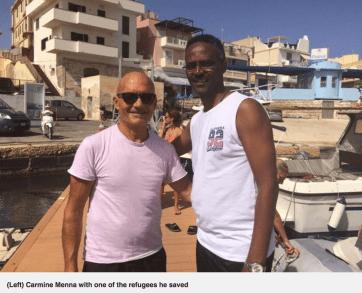
My wife, Suzy Aitchison (TV, Jam and Jerusalem, Topsy & Tim) has agreed to take the part of Teresa, the wife of Carmine Menna, the optician. Teresa was in the boat rescuing refugees and was hugely affected afterwards by what happened (they only managed to rescue 40 out of 400 refugees – more and their boat would have sunk). Suzy’s scanned 3D image, reflecting Teresa’s reaction during the rescue, will be one of two life sized sculptures in the exhibit.
Leo Wringer (TV, The Moonstone, 2016) has agreed to take the part of one of the refugees.
I now have a Microsoft Hololens.I have a Vuze 3D VR camera on order, which starts shipping on 3 March. Sion Fletcher, a lecturer at Central St. Martins, with a special interest in the CSM 4D studios, has agreed to provide support as I grapple with the technicalities of filming and displaying the actor’s narrations in Mixed Reality.
I have ordered Castable PLA materials for my Ultimaker 2+ Extended 3D Printer which is now installed in the MA Fine art Digital studio at UAL Camberwell college of Arts. I am making all these facilities available (while supervised) to other MA FAD students.
That’s it for the moment. I will post regular blogs from now on, to report progress as we head towards our final MA Show exhibition in July 2017.
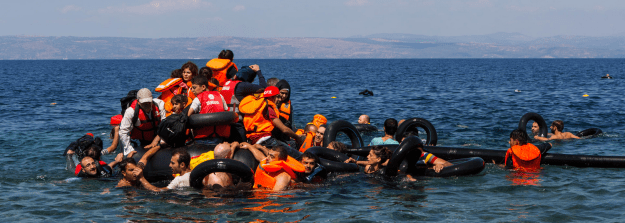
The piece is about the plight of refugees fleeing to Europe in small overcrowded boats, which often capsize, drowning the occupants – unless they are rescued – and then what?
I am grateful for Stephen’s advice to date, but going forward, and in order to avoid any conflict of interest, I will be using my MA Fine art Digital tutors and MA colleagues as a sounding board for the development of this work for my MA Show.
Here are my early inspirations and ideas:
Strange Fruit
Strange fruit – Billie Holiday, Cafe Society, and an early cry for civil rights
I saw the original stage production at the Edinburgh Festival, August 2016
Ideas for Video Clips
I have ordered the Vuze 3D 360 degree camera, to make the backdrops to the Holographic 3D images of the actors
Ideas for accompanying Bronze Sculptures
Using scans made, using the Veronica Scanner, of my wife Suzy and I, to represent drowning people. This is Suzy. I have yet to get mine, hopefully in the next few days. I will 3D print the files in castable PLA, in several pieces that I will need to bond together, to make a life sized bust.
I have no experience of making a film (but I have had very minor roles in a couple), let alone one in Mixed Reality. Nor have I written a script or film treatment. So I have reached out to others for guidance. I am grateful for the help of the following mentors:
Michael Mueller, Director and Producer, Scoop Films To guide me in the process of creating an artistically engaging piece of work.
Albert Kim, CEO and Founder, DoubleMe – Holographic Virtual Reality Experiences For his kind offer to make up to 10 mins of Augmented Reality film for the Microsoft Hololens (equipment I have ordered) in their studio, alongside Ravensbourne University. In return I have to make the filmed holographic 3D objects (actors) available for others to access on YouTube, and for use in their own work under a Creative Commons agreement.
Hopefully, through contacts Kai Fischer and the National Theatre of Scotland, who in any case I need to obtain permission to incorporate some of their ideas into my artwork.
Show Presentation
The Hololens Augmented reality headset, through which the viewer immerses themselves in the artwork. They will be able to walk around the actors and into the scenes, and listen to the same sounds playing outside on the projector screen.
A back-projected large screen of the images as seen through the Hololens headset (but in 2D) . This is for viewers who are not using the Hololens headset.
Stereo sound using a Feonic audio-source on the rear of the projector screen, so that there are no visible speakers.
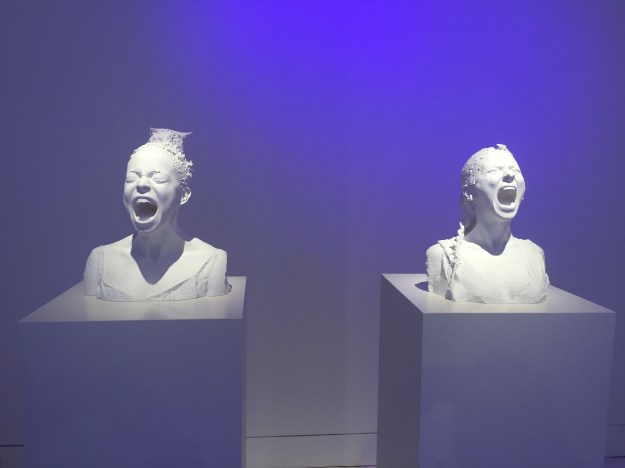
Two plinths, each with a foundry bronze life sized sculpture of the bust of two survivors, before their rescue from the sea. Similar to:
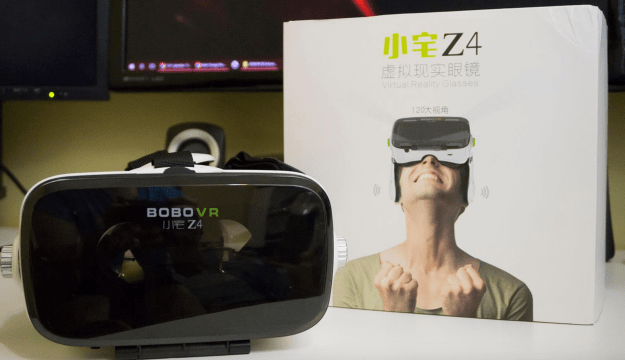
Two Google Cardboard type headsets, duplicating the view of the Hololens experience but in Virtual (totally immersive) Reality.
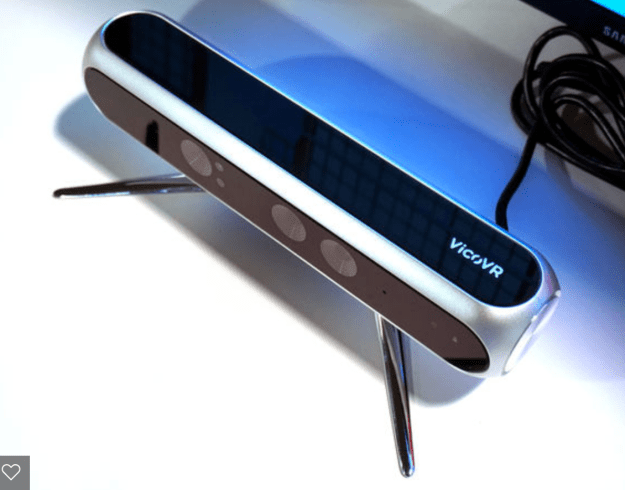
This will be a downloaded version to the iPhone in the BoboVR headset, linked to a tracking by a VicoVR, full body controller for mobile Virtual Reality. This is similar to Kinect but for mobile devices, without connection to a computer.
vicorvr.com/#slide-get.
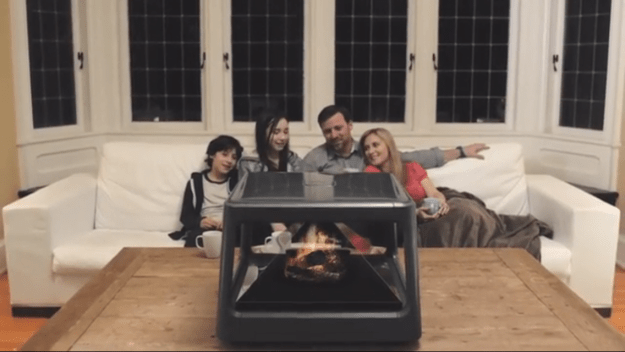
A Holographic Display, which I have ordered from H+ Technology, Canada. This will play the video footage and sound from the same 3D Virtual Reality file on an iPhone or iPad.
Summary – A Comparison of Experiences
Traditional projected video and sound
Mixed Reality
Virtual Reality
Holographic Display
Perhaps, each installation could be in a separate place in the MA Show (as at last year’s MA Show for Peter Mansell). Potentially, due to space considerations, I may have to pair this back for the show itself.
The viewers will be asked to say which one they preferred. This will be part of my Research for my MA. I will try and introduce some of these displays, even if unfinished, at our Digital Maker Collective events at the Switch House, Tate Modern in Feb/Mar next year.





 terencemquinn91